HAPP Ransomware
Protecting personal and corporate devices from malware has become a critical requirement in an environment where ransomware attacks continue to evolve in sophistication and scale. Modern ransomware families are capable of encrypting thousands of files within minutes, disrupting operations, causing financial damage, and exposing sensitive information. Among the threats associated with this growing cybercriminal ecosystem is HAPP Ransomware, a dangerous file-encrypting malware strain linked to the notorious GlobeImposter ransomware family.
Table of Contents
HAPP Ransomware: A Dangerous GlobeImposter Variant
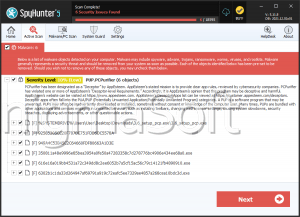
HAPP Ransomware is a malware threat designed to infiltrate Windows systems, encrypt valuable data, and extort victims for cryptocurrency payments. Once executed on a compromised machine, the malware aggressively searches local drives, mapped network storage, removable media, and shared directories for commonly used file formats. Documents, images, databases, videos, archives, and business-related data are among the primary targets.
After encryption is completed, the ransomware appends the '.HAPP' extension to every affected file. For example, a file originally named 'report.docx' becomes 'report.docx.HAPP,' rendering it inaccessible to both users and software applications. Victims are then presented with ransom notes placed across infected directories and desktop locations, instructing them to contact the attackers and pay a ransom in cryptocurrency to allegedly obtain a decryption key.
The threat belongs to the long-running GlobeImposter ransomware operation, which has produced numerous variants over the years. Although the extensions and ransom notes differ between campaigns, the underlying attack methodology remains highly consistent. GlobeImposter operators rely on strong cryptographic algorithms and carefully orchestrated infection chains designed to maximize damage while limiting recovery opportunities for victims.
Infection Vectors Used to Deliver HAPP Ransomware
HAPP Ransomware does not infect systems randomly. Cybercriminals distribute the threat through several well-established attack vectors that exploit both technical weaknesses and human error.
Malicious email attachments remain one of the most effective delivery mechanisms. Attackers frequently launch phishing campaigns disguised as invoices, payment confirmations, legal notices, or shipping updates. Attached files often contain malicious scripts, embedded macros, or disguised executables that silently deploy the ransomware once opened. These phishing campaigns are often highly convincing and carefully crafted to pressure recipients into acting quickly without verifying legitimacy.
Another major attack vector involves compromised Remote Desktop Protocol (RDP) services. Threat actors scan the internet for exposed RDP ports protected by weak or reused credentials. Once access is obtained through brute-force attacks or stolen login data, attackers can manually deploy the ransomware within the targeted environment. This technique is especially common in attacks against businesses and poorly secured corporate networks.
Drive-by downloads and compromised websites also play a role in ransomware distribution. Visiting a malicious or hacked website may trigger exploit kits that abuse outdated browsers, plugins, or unpatched software vulnerabilities to install the ransomware payload without visible user interaction.
Pirated software, unofficial downloads, and bundled freeware represent another significant risk. Cybercriminals frequently hide ransomware installers inside cracked applications, fake software activators, and self-extracting archives distributed through torrent platforms and suspicious download portals.
Why Paying the Ransom Is Strongly Discouraged
Paying ransomware operators creates multiple risks beyond the immediate financial loss. Victims may never receive a valid decryption tool, may obtain partially functional software, or may become targets for additional extortion attempts in the future. Ransom payments also directly finance criminal operations and encourage the continued development of new ransomware campaigns.
Security researchers have occasionally released free decryptors for specific GlobeImposter variants. Victims should therefore investigate legitimate recovery resources before considering any payment. The No More Ransom Project remains one of the most trusted platforms for checking whether a free decryptor exists for a particular ransomware strain.
Security Practices That Strengthen Malware Defense
Effective ransomware protection requires a layered security strategy rather than reliance on a single defensive tool. Organizations and individual users alike benefit significantly from maintaining regular offline backups that cannot be directly reached from the primary system. Backup copies should be tested periodically to ensure successful restoration in the event of an attack.
Strong password hygiene and multi-factor authentication are particularly important for protecting RDP services and administrative accounts. Exposed remote access services should be restricted whenever possible, and unnecessary ports should never remain publicly accessible to the internet.
Consistent patch management also plays a crucial role in ransomware prevention. Operating systems, browsers, plugins, and third-party applications should be updated regularly to close vulnerabilities commonly exploited by attackers. Advanced endpoint security solutions capable of behavioral monitoring can further help detect suspicious encryption activity before widespread damage occurs.
Users should remain cautious when handling unsolicited emails, especially messages containing attachments, embedded links, or urgent financial requests. Employee cybersecurity awareness training can dramatically reduce the success rate of phishing campaigns that serve as initial infection points for ransomware operations.
Network segmentation offers additional protection in business environments by limiting the ability of ransomware to spread across entire infrastructures. Restricting administrative privileges and enforcing least-privilege access policies further reduces the impact of compromised accounts.
The Growing Threat of Modern Ransomware
HAPP Ransomware demonstrates how mature ransomware families such as GlobeImposter continue adapting their tactics to remain effective against modern defenses. Through phishing campaigns, compromised remote services, malicious downloads, and sophisticated encryption routines, these threats can inflict severe operational and financial damage within a short period of time.
Defending against ransomware requires a combination of technical safeguards, employee awareness, proactive monitoring, and resilient backup strategies. While no security posture can eliminate all risk entirely, organizations and individuals that maintain strong cybersecurity practices place themselves in a far stronger position to resist attacks and recover quickly when incidents occur.