PUP.Dll Suite
Threat Scorecard
EnigmaSoft Threat Scorecard
EnigmaSoft Threat Scorecards are assessment reports for different malware threats which have been collected and analyzed by our research team. EnigmaSoft Threat Scorecards evaluate and rank threats using several metrics including real-world and potential risk factors, trends, frequency, prevalence, and persistence. EnigmaSoft Threat Scorecards are updated regularly based on our research data and metrics and are useful for a wide range of computer users, from end users seeking solutions to remove malware from their systems to security experts analyzing threats.
EnigmaSoft Threat Scorecards display a variety of useful information, including:
Popularity Rank: The ranking of a particular threat in EnigmaSoft’s Threat Database.
Severity Level: The determined severity level of an object, represented numerically, based on our risk modeling process and research, as explained in our Threat Assessment Criteria.
Infected Computers: The number of confirmed and suspected cases of a particular threat detected on infected computers as reported by SpyHunter.
See also Threat Assessment Criteria.
| Popularity Rank: | 10,442 |
| Threat Level: | 10 % (Normal) |
| Infected Computers: | 4,390 |
| First Seen: | March 27, 2019 |
| Last Seen: | September 2, 2026 |
| OS(es) Affected: | Windows |
The detection of PUP.Dll Suite on your system indicates the presence of a potentially unwanted program (PUP) that may be causing issues with your computer's performance and security. It is essential to understand the nature of this threat and take immediate action to remove it to prevent any potential harm.
Table of Contents
What Is PUP.Dll Suite?
PUP.Dll Suite is a type of potentially unwanted program that may have been installed on your system without your knowledge or consent. PUPs are software applications that may not be malicious in nature but can still cause problems with your computer's performance, stability, and security. They often come bundled with other software or are downloaded from untrusted sources, and can be challenging to remove once installed.
How PUP.Dll Suite Operates
PUP.Dll Suite, like other PUPs, may operate by installing additional software components, modifying system settings, and collecting user data without consent. It may also display unwanted advertisements, redirect browser searches, or slow down system performance. The primary goal of PUPs is often to generate revenue for their creators, rather than providing any legitimate benefit to the user.
PUPs can be particularly problematic because they may not be detected by traditional antivirus software, and their removal can be complicated. They may also be designed to reinstall themselves or leave behind residual components, making it challenging to completely eliminate them from the system.
Symptoms of Infection
If your system is infected with PUP.Dll Suite, you may experience a range of symptoms, including slow system performance, unwanted advertisements, browser redirects, and unexpected software installations. You may also notice that your browser settings have been modified, or that new toolbars or extensions have been installed without your consent.
- Unwanted pop-ups or advertisements
- Browser redirects or modified search results
- Slow system performance or crashes
- Unexpected software installations or updates
- Modified browser settings or new toolbars/extensions
How to Remove PUP.Dll Suite
- Boot your system in Safe Mode with Networking to prevent the PUP from loading and to allow for easier removal.
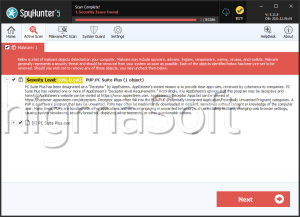
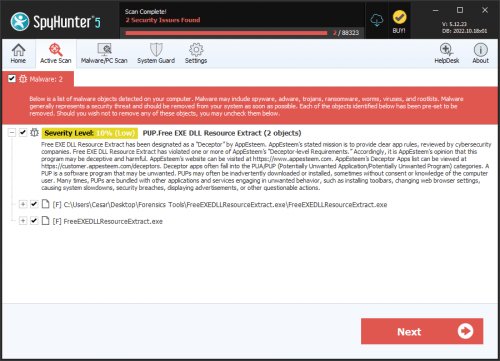
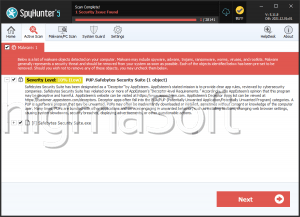
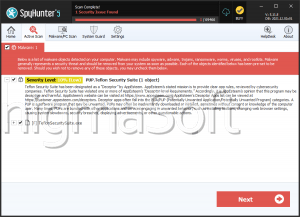
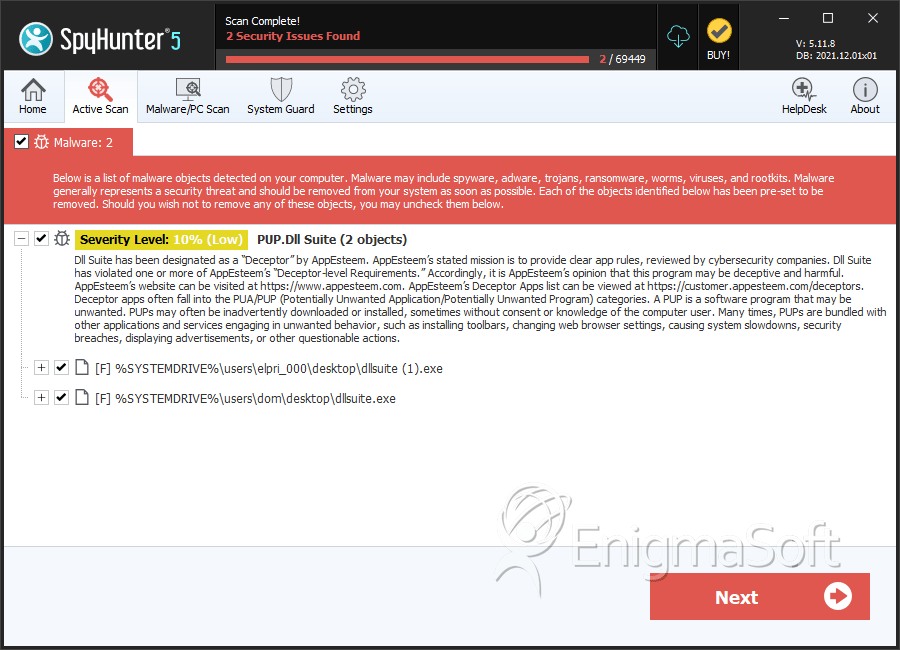
- Use a reputable anti-malware tool, such as SpyHunter, to perform a full scan of your system and detect any malicious components.
- Uninstall any suspicious programs or software that may be related to the PUP.
- Reset your browser settings to their default values, including Chrome, Firefox, and Edge, to remove any modified settings or extensions.
- Reboot your system and perform a follow-up scan to ensure that all components of the PUP have been removed.
Conclusion
Removing PUP.Dll Suite from your system requires careful attention to detail and a thorough approach. By following the steps outlined above, you can help ensure that your system is free from this potentially unwanted program and any associated malware. It is essential to remain vigilant and take proactive steps to protect your system from future infections, including keeping your operating system and software up to date, using reputable antivirus software, and being cautious when downloading software from untrusted sources.
SpyHunter Detects & Remove PUP.Dll Suite
File System Details
| # | File Name | MD5 |
Detections
Detections: The number of confirmed and suspected cases of a particular threat detected on
infected computers as reported by SpyHunter.
|
|---|---|---|---|
| 1. | dllsuite (1).exe | 028803be6da59bad65401494cf95ed69 | 57 |
| 2. | dllsuite.exe | cfa1e59ac4c3c4665806023d04fd6a3e | 35 |
Analysis Report
General information
| Family Name: | PUP.Dll Suite |
|---|---|
| Signature status: | Hash Mismatch |
Known Samples
Known Samples
This section lists other file samples believed to be associated with this family.|
MD5:
b12340abc0979c0a4937eca6fcf0bb7b
SHA1:
fecb14d42e26575d1a78df9a899822efe4c84530
SHA256:
B3F15A1D8CE2C65D7AAC46C153D704303A4C4825C0F174F5195BD80092F069A8
File Size:
2.73 MB, 2728976 bytes
|
|
MD5:
271ec71cc853f8cce3839ad4646992fc
SHA1:
62074df85b65cb5a8e91afe74ad667263c8e6d8a
SHA256:
EFD13A260809ABC059F96251273FF5DEBC60192FF7467E2A37B63FE471392B66
File Size:
265.23 KB, 265232 bytes
|
|
MD5:
4a8550330338021a7fc1206dbf1b9ff7
SHA1:
523a896cfd5585a1e2e06f4838db05f42e693299
SHA256:
C9B312D5F707400E14CE642BE40945676B2DE48F2A481A64E3D4E18823E45650
File Size:
343.51 KB, 343511 bytes
|
Windows Portable Executable Attributes
- File doesn't have "Rich" header
- File doesn't have debug information
- File doesn't have exports table
- File doesn't have relocations information
- File has exports table
- File has TLS information
- File is 32-bit executable
- File is either console or GUI application
- File is GUI application (IMAGE_SUBSYSTEM_WINDOWS_GUI)
- File is Native application (NOT .NET application)
Show More
- File is not packed
- IMAGE_FILE_DLL is not set inside PE header (Executable)
- IMAGE_FILE_EXECUTABLE_IMAGE is set inside PE header (Executable Image)
File Icons
File Icons
This section displays icon resources found within family samples. Malware often replicates icons commonly associated with legitimate software to mislead users into believing the malware is safe.


Windows PE Version Information
Windows PE Version Information
This section displays values and attributes that have been set in the Windows file version information data structure for samples within this family. To mislead users, malware actors often add fake version information mimicking legitimate software.| Name | Value |
|---|---|
| File Version | 1.0.0.0 |
| Product Version | 1.0.0.0 |
Digital Signatures
Digital Signatures
This section lists digital signatures that are attached to samples within this family. When analyzing and verifying digital signatures, it is important to confirm that the signature’s root authority is a well-known and trustworthy entity and that the status of the signature is good. Malware is often signed with non-trustworthy “Self Signed” digital signatures (which can be easily created by a malware author with no verification). Malware may also be signed by legitimate signatures that have an invalid status, and by signatures from questionable root authorities with fake or misleading “Signer” names.| Signer | Root | Status |
|---|---|---|
| Beijing VSK Soft Development Co.,Ltd | Symantec Class 3 SHA256 Code Signing CA | Hash Mismatch |
| Beijing VSK Soft Development Co.,Ltd | Symantec Class 3 SHA256 Code Signing CA | Self Signed |
Block Information
Block Information
During analysis, EnigmaSoft breaks file samples into logical blocks for classification and comparison with other samples. Blocks can be used to generate malware detection rules and to group file samples into families based on shared source code, functionality and other distinguishing attributes and characteristics. This section lists a summary of this block data, as well as its classification by EnigmaSoft. A visual representation of the block data is also displayed, where available.| Total Blocks: | 1,019 |
|---|---|
| Potentially Malicious Blocks: | 29 |
| Whitelisted Blocks: | 956 |
| Unknown Blocks: | 34 |
Visual Map
? - Unknown Block
x - Potentially Malicious Block
Similar Families
Similar Families
This section lists other families that share similarities with this family, based on EnigmaSoft’s analysis. Many malware families are created from the same malware toolkits and use the same packing and encryption techniques but uniquely extend functionality. Similar families may also share source code, attributes, icons, subcomponents, compromised and/or invalid digital signatures, and network characteristics. Researchers leverage these similarities to rapidly and effectively triage file samples and extend malware detection rules.- Proxy.Agent.D
- Tnega.A
Files Modified
Files Modified
This section lists files that were created, modified, moved and/or deleted by samples in this family. File system activity can provide valuable insight into how malware functions on the operating system.| File | Attributes |
|---|---|
| \device\namedpipe\{4fa4cc03-fb62-4c58-9261-5e325c7b7464} | Generic Read,Write Data,Write Attributes,Write extended,Append data |
| c:\program files\common files\system\symsrv.dll | Generic Write,Read Attributes |
Windows API Usage
Windows API Usage
This section lists Windows API calls that are used by the samples in this family. Windows API usage analysis is a valuable tool that can help identify malicious activity, such as keylogging, security privilege escalation, data encryption, data exfiltration, interference with antivirus software, and network request manipulation.| Category | API |
|---|---|
| Syscall Use |
Show More
|
| Process Manipulation Evasion |
|
| Process Shell Execute |
|
| Anti Debug |
|
Shell Command Execution
Shell Command Execution
This section lists Windows shell commands that are run by the samples in this family. Windows Shell commands are often leveraged by malware for nefarious purposes and can be used to elevate security privileges, download and launch other malware, exploit vulnerabilities, collect and exfiltrate data, and hide malicious activity.
C:\WINDOWS\SysWOW64\rundll32.exe C:\WINDOWS\system32\rundll32.exe c:\users\user\downloads\62074df85b65cb5a8e91afe74ad667263c8e6d8a_0000265232.,LiQMAxHB
|
C:\WINDOWS\SysWOW64\rundll32.exe C:\WINDOWS\system32\rundll32.exe c:\users\user\downloads\523a896cfd5585a1e2e06f4838db05f42e693299_0000343511.,LiQMAxHB
|