Fucked Ransomware
Threat Scorecard
EnigmaSoft Threat Scorecard
EnigmaSoft Threat Scorecards are assessment reports for different malware threats which have been collected and analyzed by our research team. EnigmaSoft Threat Scorecards evaluate and rank threats using several metrics including real-world and potential risk factors, trends, frequency, prevalence, and persistence. EnigmaSoft Threat Scorecards are updated regularly based on our research data and metrics and are useful for a wide range of computer users, from end users seeking solutions to remove malware from their systems to security experts analyzing threats.
EnigmaSoft Threat Scorecards display a variety of useful information, including:
Popularity Rank: The ranking of a particular threat in EnigmaSoft’s Threat Database.
Severity Level: The determined severity level of an object, represented numerically, based on our risk modeling process and research, as explained in our Threat Assessment Criteria.
Infected Computers: The number of confirmed and suspected cases of a particular threat detected on infected computers as reported by SpyHunter.
See also Threat Assessment Criteria.
| Threat Level: | 100 % (High) |
| Infected Computers: | 288 |
| First Seen: | May 23, 2017 |
| Last Seen: | November 2, 2025 |
| OS(es) Affected: | Windows |
The detection of Fucked Ransomware on your system indicates a serious security threat that requires immediate attention. Ransomware is a type of malware designed to encrypt files on a victim's computer, demanding payment in exchange for the decryption key. In this report, we will provide an overview of the Fucked Ransomware threat, its operational methods, symptoms of infection, and steps to remove it from your system.
Table of Contents
What Is Fucked Ransomware?
Ransomware, like Fucked Ransomware, is a malicious software that uses encryption to hold a victim's files hostage. It typically spreads through phishing emails, exploited vulnerabilities, or infected software downloads. Once inside a system, it begins to encrypt files, making them inaccessible to the user. The attackers then demand a ransom, usually in cryptocurrency, in exchange for the decryption key. It is essential to note that paying the ransom does not guarantee that the attackers will provide the decryption key or that the key will work correctly.
How Fucked Ransomware Operates
Fucked Ransomware, like other ransomware variants, operates by exploiting system vulnerabilities or using social engineering tactics to gain access to a victim's computer. Once inside, it starts encrypting files, often targeting common file types such as documents, images, and videos. The malware may also attempt to spread to other connected devices or networks, increasing the scope of the attack. In some cases, ransomware may also steal sensitive information, such as login credentials or financial data, before encrypting files.
Symptoms of Infection
Common symptoms of a Fucked Ransomware infection include the inability to access files, files with unusual extensions, and ransom demands displayed on the screen. You may also notice a significant decrease in system performance, as the malware consumes system resources to carry out the encryption process. In some cases, the malware may also display fake alerts or warnings, attempting to deceive the user into paying the ransom or providing sensitive information.
How to Remove Fucked Ransomware
- Boot your computer in Safe Mode with Networking to prevent the malware from loading and to allow for the installation of removal tools.
- Download and install a reputable anti-malware tool, such as SpyHunter, and perform a full scan of your system to detect and remove the Fucked Ransomware and any related malware.
- Uninstall any suspicious programs or applications that may be related to the infection.
- Reset your web browsers, including Chrome, Firefox, and Edge, to their default settings to remove any malicious extensions or add-ons.
- Reboot your computer and perform a follow-up scan with your anti-malware tool to ensure that the system is clean and free of any remaining malware.
Conclusion
Removing Fucked Ransomware from your system requires a combination of technical expertise and caution. It is essential to follow the steps outlined above carefully to avoid causing further damage to your system or losing important files. Remember that prevention is key, and taking proactive measures such as regularly updating your operating system and software, using strong antivirus protection, and being cautious when opening emails or downloading attachments can help protect your system from ransomware attacks in the future.
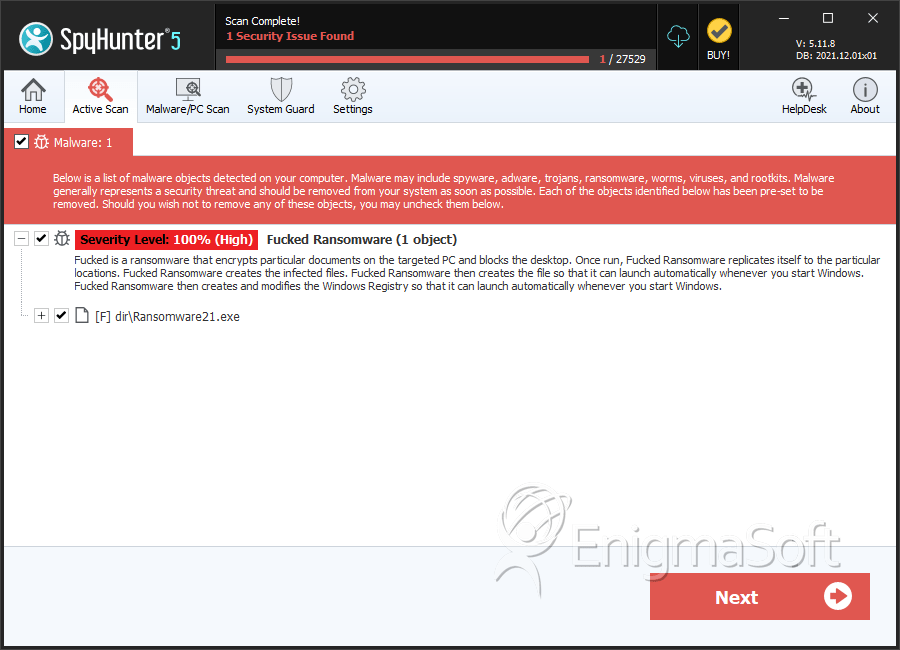
SpyHunter Detects & Remove Fucked Ransomware
File System Details
| # | File Name | MD5 |
Detections
Detections: The number of confirmed and suspected cases of a particular threat detected on
infected computers as reported by SpyHunter.
|
|---|---|---|---|
| 1. | Ransomware21.exe | c1b2b3740db60a695102c9359ab447fa | 0 |
Analysis Report
General information
| Family Name: | Fucked Ransomware |
|---|---|
| Signature status: | No Signature |
Known Samples
Known Samples
This section lists other file samples believed to be associated with this family.|
MD5:
b1f550f1c7ef2b58685810c62d86976e
SHA1:
ae01d0ff280294bb881b338fd4afb5928b97310d
SHA256:
E9168EDE51F785CE756A28D0292FA1C024B21E4B042426201F95E9EEE554D02D
File Size:
3.06 MB, 3058228 bytes
|
Windows Portable Executable Attributes
- File doesn't have "Rich" header
- File doesn't have debug information
- File doesn't have exports table
- File doesn't have relocations information
- File doesn't have security information
- File is 32-bit executable
- File is either console or GUI application
- File is GUI application (IMAGE_SUBSYSTEM_WINDOWS_GUI)
- File is Native application (NOT .NET application)
- File is not packed
Show More
- IMAGE_FILE_DLL is not set inside PE header (Executable)
- IMAGE_FILE_EXECUTABLE_IMAGE is set inside PE header (Executable Image)
File Icons
File Icons
This section displays icon resources found within family samples. Malware often replicates icons commonly associated with legitimate software to mislead users into believing the malware is safe.
Windows PE Version Information
Windows PE Version Information
This section displays values and attributes that have been set in the Windows file version information data structure for samples within this family. To mislead users, malware actors often add fake version information mimicking legitimate software.| Name | Value |
|---|---|
| File Version | 1.00 |
| Internal Name | TJprojMain |
| Original Filename | TJprojMain.exe |
| Product Name | Project1 |
| Product Version | 1.00 |
File Traits
- .NET
- Agile.net
- Fody
- RijndaelManaged
- x64
Windows API Usage
Windows API Usage
This section lists Windows API calls that are used by the samples in this family. Windows API usage analysis is a valuable tool that can help identify malicious activity, such as keylogging, security privilege escalation, data encryption, data exfiltration, interference with antivirus software, and network request manipulation.| Category | API |
|---|---|
| Other Suspicious |
|