HackTool:Win32/Patcher.B
Threat Scorecard
EnigmaSoft Threat Scorecard
EnigmaSoft Threat Scorecards are assessment reports for different malware threats which have been collected and analyzed by our research team. EnigmaSoft Threat Scorecards evaluate and rank threats using several metrics including real-world and potential risk factors, trends, frequency, prevalence, and persistence. EnigmaSoft Threat Scorecards are updated regularly based on our research data and metrics and are useful for a wide range of computer users, from end users seeking solutions to remove malware from their systems to security experts analyzing threats.
EnigmaSoft Threat Scorecards display a variety of useful information, including:
Popularity Rank: The ranking of a particular threat in EnigmaSoft’s Threat Database.
Severity Level: The determined severity level of an object, represented numerically, based on our risk modeling process and research, as explained in our Threat Assessment Criteria.
Infected Computers: The number of confirmed and suspected cases of a particular threat detected on infected computers as reported by SpyHunter.
See also Threat Assessment Criteria.
| Threat Level: | 10 % (Normal) |
| Infected Computers: | 1,282 |
| First Seen: | April 23, 2013 |
| Last Seen: | April 28, 2026 |
| OS(es) Affected: | Windows |
The detection of HackTool:Win32/Patcher.B on your system indicates the presence of a potentially malicious tool that could compromise your computer's security and integrity. This detection name suggests that the malware is categorized as a hack tool, which is a type of software designed to bypass security mechanisms or modify system settings without the user's knowledge or consent.
Table of Contents
What Is HackTool:Win32/Patcher.B?
HackTool:Win32/Patcher.B is a type of malware that falls under the broader category of hack tools. These tools are often used by attackers to gain unauthorized access to systems, steal sensitive information, or disrupt normal system operations. The specific capabilities and intentions of HackTool:Win32/Patcher.B can vary, but its primary function is likely to facilitate malicious activities on the compromised system.
How HackTool:Win32/Patcher.B Operates
Malware like HackTool:Win32/Patcher.B typically operates by exploiting vulnerabilities in software or manipulating system settings to achieve its goals. It may be designed to run in the background, hiding from the user while it performs its malicious tasks. This could include anything from data theft and unauthorized system modifications to the installation of additional malware. Understanding the exact operation of HackTool:Win32/Patcher.B requires detailed analysis, but it's clear that its presence poses a significant risk to system security and user privacy.
Symptoms of Infection
Symptoms of an infection can vary widely, depending on the specific actions of the malware. Common signs include unexpected system crashes, slow performance, unfamiliar programs or icons, and changes in browser settings or homepage. Additionally, users might notice unusual network activity or find that their personal files have been accessed or modified without their permission. However, some malware is designed to operate stealthily, making it difficult for users to detect without the aid of security software.
How to Remove HackTool:Win32/Patcher.B
- Enter Safe Mode with Networking to limit the malware's ability to interfere with the removal process. This mode allows you to use the internet to download necessary tools while minimizing system activity.
- Perform a full scan of your system using a reputable anti-malware tool, such as SpyHunter. This can help identify and remove all components of the malware.
- Uninstall suspicious programs that you do not recognize or that were installed around the time the malware was detected. Be cautious and only remove programs you are certain are malicious or unnecessary.
- Reset your web browsers, including Chrome, Firefox, and Edge, to their default settings. This can help remove any malicious extensions or settings changes made by the malware.
- Finally, reboot your system and perform another scan to ensure that all malware components have been removed and that your system is clean.
Conclusion
The removal of HackTool:Win32/Patcher.B requires careful and thorough steps to ensure that all components of the malware are eliminated from your system. It's also crucial to take preventive measures to avoid future infections, such as keeping your operating system and software up to date, using strong antivirus software, and being cautious when opening email attachments or downloading files from the internet. By understanding the risks associated with hack tools like HackTool:Win32/Patcher.B and taking proactive steps to secure your system, you can significantly reduce the risk of malware infections and protect your digital security.
Aliases
15 security vendors flagged this file as malicious.
| Antivirus Vendor | Detection |
|---|---|
| AVG | Dropper.Generic8.XBX |
| Fortinet | W32/Injector.YFC!tr |
| Kaspersky | Trojan.Win32.Bublik.aqdo |
| AntiVir | Adware/Lollipop.AK.10 |
| Avast | Win32:Adware-AQD [Adw] |
| Ikarus | Trojan.Agent4 |
| Avast | Win32:Adware-APZ [Adw] |
| AVG | Generic32.BVOH |
| AntiVir | Adware/Lollipop.AL.14 |
| Avast | Win32:Adware-APW [Adw] |
| McAfee | Artemis!5995A5497AD2 |
| Ikarus | Trojan.SuspectCRC |
| Sophos | Mal/Behav-058 |
| McAfee | Artemis!15A02C5930E2 |
| BitDefender | Gen:Trojan.Heur.JP.gC0@aqPQuEfi |
SpyHunter Detects & Remove HackTool:Win32/Patcher.B
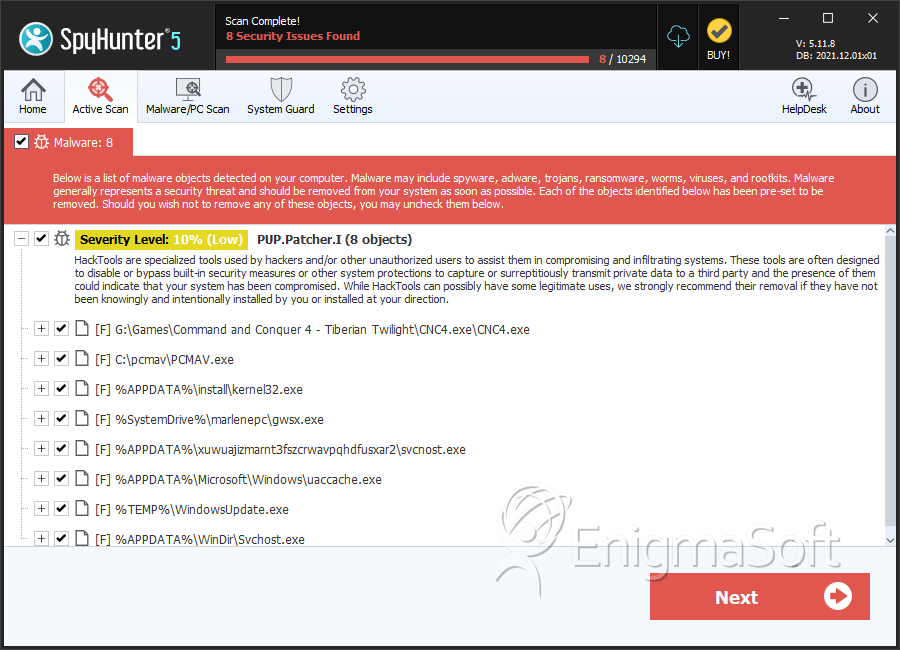
File System Details
| # | File Name | MD5 |
Detections
Detections: The number of confirmed and suspected cases of a particular threat detected on
infected computers as reported by SpyHunter.
|
|---|---|---|---|
| 1. | CNC4.exe | 5dfba24f2d60478adca713447689514d | 419 |
| 2. | PCMAV.exe | 15a02c5930e2f7d18eb379fb8e5de705 | 45 |
| 3. | kernel32.exe | e8fc797cf830d597284709aa8f052fed | 14 |
| 4. | gwsx.exe | f7b45edac66533994bb9c3f3eee54398 | 8 |
| 5. | svcnost.exe | 470ee17e21cf231241ee6714740d5590 | 7 |
| 6. | uaccache.exe | 204b3984735309c0c066802d82e98589 | 6 |
| 7. | WindowsUpdate.exe | b4cb159208511637ca06e78dbfb0af97 | 6 |
| 8. | Svchost.exe | b15fd86e76c538d2883770c245ca6b01 | 5 |
| 9. | lollipop_04130133.exe | 5995a5497ad25e86850d99704e8f6d62 | 4 |
| 10. | 13B3.exe | 3afabf1fb728dd5d2f56ecee58bdf1ce | 3 |
| 11. | 1503.exe | 1e1bebacfd53090b80e015009628b042 | 3 |
| 12. | Rene F. Escalante.exe | fdd9c2f438a2e6edc97720d31e230cd2 | 2 |
| 13. | KJ.exe | 6211cbb861239c61bf61313e5819887d | 2 |
| 14. | Lollipop.exe | 55f4fdd6ca18db9feb0aa298755221eb | 1 |
| 15. | lollipop_04152028.exe | 0c827f57a8b5f1ca686c265b763b0f27 | 1 |
| 16. | 18rm8qa1i6bggt-10070.exe | 4d6f012a743f53119ffecf8390ccd189 | 1 |
| 17. | vlcplayer.exe | d80b933969d063df79eb7ddcfb3c6cfb | 1 |
Analysis Report
General information
| Family Name: | PUP.Patcher.I |
|---|---|
| Signature status: | No Signature |
Known Samples
Known Samples
This section lists other file samples believed to be associated with this family.|
MD5:
dbcd614808e929d5be9ce47950702e3c
SHA1:
438123865cb983e48a89dc9961b2716c6f936e8f
SHA256:
31365F37E3C379835B88533026531079001CFE6D79A17D1F0C712A08A1AADCF1
File Size:
66.08 KB, 66083 bytes
|
Windows Portable Executable Attributes
- File doesn't have "Rich" header
- File doesn't have debug information
- File doesn't have exports table
- File doesn't have relocations information
- File doesn't have security information
- File is 32-bit executable
- File is either console or GUI application
- File is GUI application (IMAGE_SUBSYSTEM_WINDOWS_GUI)
- File is Native application (NOT .NET application)
- File is not packed
Show More
- IMAGE_FILE_DLL is not set inside PE header (Executable)
- IMAGE_FILE_EXECUTABLE_IMAGE is set inside PE header (Executable Image)
File Icons
File Icons
This section displays icon resources found within family samples. Malware often replicates icons commonly associated with legitimate software to mislead users into believing the malware is safe.
File Traits
- No Version Info
- x86
Block Information
Block Information
During analysis, EnigmaSoft breaks file samples into logical blocks for classification and comparison with other samples. Blocks can be used to generate malware detection rules and to group file samples into families based on shared source code, functionality and other distinguishing attributes and characteristics. This section lists a summary of this block data, as well as its classification by EnigmaSoft. A visual representation of the block data is also displayed, where available.| Total Blocks: | 122 |
|---|---|
| Potentially Malicious Blocks: | 14 |
| Whitelisted Blocks: | 108 |
| Unknown Blocks: | 0 |
Visual Map
? - Unknown Block
x - Potentially Malicious Block