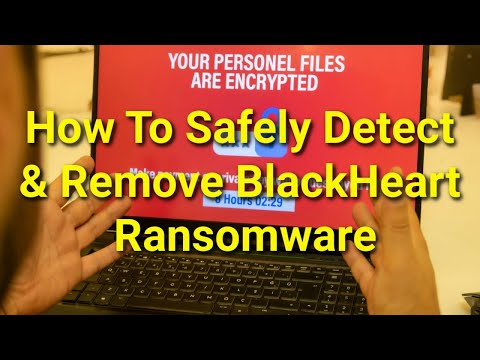
BlackHeart (MedusaLocker) Ransomware
Ransomware is still one of the most devastating cyber threats, capable of encrypting valuable data and demanding hefty payments for its release. Among the latest ransomware strains, BlackHeart, a variant of the MedusaLocker family, has emerged as a dangerous threat. This sophisticated ransomware not only locks users out of their files but also threatens to expose stolen data, putting victims under immense pressure to comply with attackers' demands. Understanding how BlackHeart operates and the best practices to mitigate such attacks is crucial in safeguarding personal and corporate data.
Table of Contents
How the BlackHeart Ransomware Encrypts and Extorts Victims
Once executed on an infected system, the BlackHeart Ransomware begins an aggressive encryption process, targeting a wide range of file types. Each encrypted file is appended with the '.blackheart138' extension, rendering it inaccessible. For instance, a file named 'document.pdf' would become 'document.pdf.blackheart138,' effectively locking users out of their data.
Alongside encrypting files, BlackHeart drops a ransom note titled 'read_this_to_decrypt_files.html.' The message informs victims that their corporate network has been infiltrated and that essential files have been encrypted using RSA and AES encryption. It claims that only the attackers possess the necessary decryption tools and warns victims against modifying or attempting to recover the files using third-party software, as doing so could result in permanent data loss.
The Double Extortion Tactics Used by BlackHeart
A concerning trend in modern ransomware attacks is the practice of double extortion, and BlackHeart follows this pattern. The ransom note warns that sensitive company data has been exfiltrated and will be sold or published online if the victim refuses to comply with the demands. This added layer of coercion increases the pressure on victims, as they face not only financial losses but also potential reputational damage and legal repercussions if confidential data is leaked.
To negotiate the ransom payment, the attackers provide contact details, including two email addresses (support1@contonta.com and support2@cavopo.com) as well as a link to a Tor-based chat service. They further state that if victims do not establish contact within 72 hours, the ransom amount will increase. This tactic is designed to create urgency and panic, pushing victims to act quickly before they can fully assess the situation.
Why Paying the Ransom is Risky
While the prospect of recovering encrypted files might tempt victims to comply with ransom demands, doing so comes with significant risks. Cybercriminals have no obligation to honor their promises, and many victims have paid only to receive faulty or non-existent decryption tools. Additionally, sending money to ransomware operators funds their illicit activities, encouraging further attacks against individuals and businesses.
The only reliable way to restore lost data without engaging with attackers is through secure, pre-existing backups. However, if backups are stored on the same network as the infected device, they, too, may be encrypted or deleted, making proactive security measures essential.
How the BlackHeart Ransomware Spreads
Like other ransomware variants, BlackHeart relies on multiple attack vectors to infiltrate devices. Cybercriminals often distribute ransomware through phishing campaigns, disguising malicious attachments or links as legitimate business communications. Unsuspecting users who open infected email attachments or click on compromised links may unknowingly execute the ransomware on their systems.
Other standard infection methods include exploiting unpatched software vulnerabilities, distributing ransomware via compromised websites, and hiding malicious payloads in software cracks or pirated applications. Some attackers also employ malvertising—deceptive online ads that, when clicked, lead to malware infections. In corporate environments, ransomware can spread laterally across networks, infecting multiple devices and escalating the attack's impact.
Best Security Practices to Defend against Ransomware
To reduce the risk of the BlackHeart Ransomware and similar threats, users and organizations must adopt robust cybersecurity measures. Implementing the following best practices can help bolster security and minimize the likelihood of falling victim to an attack:
- Maintain Regular Backups: Store critical data in multiple secure locations, including offline backups and cloud storage with strong encryption. Ensure backups are regularly updated and tested for integrity.
- Enable Multi-Factor Authentication (MFA): This feature protects online accounts and system access by requiring multiple verification steps, making unauthorized logins more difficult.
- Keep Software and Operating Systems Upgraded: Regularly update all applications, operating systems, and security software to patch vulnerabilities that ransomware attackers might exploit.
- Practice Caution with Email Attachments and Links: Avoid opening unexpected emails, especially those urging immediate action. Verify sender identities and scan attachments for potential threats before downloading them.
- Restrict Administrative Privileges: Limit user access to critical systems and disable unnecessary administrative rights to reduce the attack surface in case of a compromise.
- Use a Reputable Security Solution: Employ robust endpoint protection with ransomware detection capabilities to identify and block suspicious activity before it can be executed.
- Disable Macros and Unnecessary Features: Since many ransomware variants abuse macros in Office documents to execute payloads, disabling macros by default can prevent accidental infections.
- Be Wary of Public and Untrusted Networks: Avoid connecting to unsecured Wi-Fi networks, as attackers can use them to intercept data or inject malicious payloads. Use a VPN for added security.
Final Thoughts
The BlackHeart Ransomware exemplifies the growing sophistication of modern cyber threats, combining file encryption with data exfiltration to maximize pressure on victims. The ransom payment is not a guaranteed data recovery and only fuels further criminal activity. Instead, users must prioritize prevention by securing their systems, maintaining reliable backups, and staying vigilant against phishing attempts and malicious software. An energetic approach to cybersecurity is the most effective defense against ransomware and other evolving digital threats.
BlackHeart (MedusaLocker) Ransomware Video
Tip: Turn your sound ON and watch the video in Full Screen mode.