Adware.Multibar
Threat Scorecard
EnigmaSoft Threat Scorecard
EnigmaSoft Threat Scorecards are assessment reports for different malware threats which have been collected and analyzed by our research team. EnigmaSoft Threat Scorecards evaluate and rank threats using several metrics including real-world and potential risk factors, trends, frequency, prevalence, and persistence. EnigmaSoft Threat Scorecards are updated regularly based on our research data and metrics and are useful for a wide range of computer users, from end users seeking solutions to remove malware from their systems to security experts analyzing threats.
EnigmaSoft Threat Scorecards display a variety of useful information, including:
Popularity Rank: The ranking of a particular threat in EnigmaSoft’s Threat Database.
Severity Level: The determined severity level of an object, represented numerically, based on our risk modeling process and research, as explained in our Threat Assessment Criteria.
Infected Computers: The number of confirmed and suspected cases of a particular threat detected on infected computers as reported by SpyHunter.
See also Threat Assessment Criteria.
| Popularity Rank: | 11,071 |
| Threat Level: | 20 % (Normal) |
| Infected Computers: | 799 |
| First Seen: | December 16, 2012 |
| Last Seen: | July 19, 2026 |
| OS(es) Affected: | Windows |
The detection of Adware.Multibar on your system indicates the presence of a potentially unwanted program that could be compromising your computer's security and performance. This type of software is designed to display unwanted advertisements, collect user data, and sometimes redirect browsing sessions to malicious websites. Understanding the nature and behavior of Adware.Multibar is crucial for effective removal and prevention of future infections.
Table of Contents
What Is Adware.Multibar?
Adware.Multibar refers to a type of adware program that is known for its ability to integrate itself into web browsers, altering their behavior to display a multitude of advertisements. These advertisements can range from pop-ups and banners to more invasive forms like browser redirects and full-page ads. The primary goal of adware like Adware.Multibar is to generate revenue for its creators by forcing users to view or interact with these advertisements.
How Adware.Multibar Operates
Adware.Multibar operates by infiltrating a computer system, often through bundled software downloads, infected email attachments, or exploit kits found on compromised websites. Once installed, it can modify browser settings, install additional software, and even collect user data such as browsing history and search queries. This data can be used to tailor advertisements to the user's interests, increasing the likelihood of clicks and, consequently, revenue for the adware creators.
Symptoms of Infection
Symptoms of an Adware.Multibar infection can vary but commonly include an increase in unwanted advertisements appearing on web pages, new toolbars or extensions in your browser that you did not install, and changes to your browser's homepage or search engine. Your computer may also exhibit slower performance due to the resource-intensive nature of adware. In some cases, you might notice that your browser redirects to unwanted websites or that pop-ups appear even when you're not browsing the internet.
How to Remove Adware.Multibar
- Enter Safe Mode with Networking to prevent Adware.Multibar from loading and to give you a cleaner environment to work in.
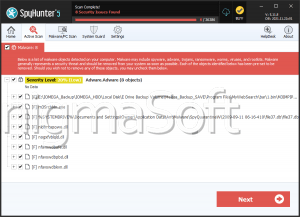
- Perform a full scan of your system using a reputable anti-malware tool, such as SpyHunter, to detect and remove all components of the adware.
- Uninstall any suspicious programs that you do not recognize or that were installed around the time the symptoms began. This can help remove any additional malware or potentially unwanted programs that may have been installed alongside Adware.Multibar.
- Reset your web browsers (Google Chrome, Mozilla Firefox, Microsoft Edge, etc.) to their default settings. This can help remove any changes made by the adware, such as unwanted extensions or altered homepage settings.
- Reboot your computer and perform another scan with your anti-malware tool to ensure that all components of Adware.Multibar have been successfully removed.
Conclusion
Removing Adware.Multibar from your system requires a combination of technical knowledge and the right tools. By following the steps outlined above and maintaining good computing practices, such as regularly updating your software and being cautious with downloads and email attachments, you can protect your system from future infections. Remember, prevention is key, and staying informed about the latest threats and how to mitigate them is crucial in today's digital landscape.
Analysis Report
General information
| Family Name: | Adware.Multibar |
|---|---|
| Packers: | UPX! |
| Signature status: | Self Signed |
Known Samples
Known Samples
This section lists other file samples believed to be associated with this family.|
MD5:
9f88c8f927d22d9cb3ae0ed8b7442ae4
SHA1:
e944b137aeacc4006f379bbf359ce37849fa2cd7
SHA256:
DA6D29A59C4E48D343AC822009ED03C80FADEBA3BA62451CC50D678F76CA44C1
File Size:
251.49 KB, 251488 bytes
|
|
MD5:
d668f6d849719333cd601b9083ab49d1
SHA1:
5391824c86206b1160dd4eb256d6b8f561a6ed60
SHA256:
D27804E4F9640004404CFB9B95803303521BD4A10AF9C8BA9EFCE584F2EAB759
File Size:
695.18 KB, 695184 bytes
|
Windows Portable Executable Attributes
- File doesn't have "Rich" header
- File doesn't have debug information
- File doesn't have exports table
- File doesn't have relocations information
- File doesn't have security information
- File has been packed
- File has TLS information
- File is 32-bit executable
- File is either console or GUI application
- File is GUI application (IMAGE_SUBSYSTEM_WINDOWS_GUI)
Show More
- File is Native application (NOT .NET application)
- File is not packed
- IMAGE_FILE_DLL is not set inside PE header (Executable)
- IMAGE_FILE_EXECUTABLE_IMAGE is set inside PE header (Executable Image)
File Icons
File Icons
This section displays icon resources found within family samples. Malware often replicates icons commonly associated with legitimate software to mislead users into believing the malware is safe.


Windows PE Version Information
Windows PE Version Information
This section displays values and attributes that have been set in the Windows file version information data structure for samples within this family. To mislead users, malware actors often add fake version information mimicking legitimate software.| Name | Value |
|---|---|
| Company Name |
|
| File Description |
|
| File Version |
|
| Internal Name | MiniInstall |
| Legal Copyright |
|
| Product Name |
|
| Product Version |
|
Digital Signatures
Digital Signatures
This section lists digital signatures that are attached to samples within this family. When analyzing and verifying digital signatures, it is important to confirm that the signature’s root authority is a well-known and trustworthy entity and that the status of the signature is good. Malware is often signed with non-trustworthy “Self Signed” digital signatures (which can be easily created by a malware author with no verification). Malware may also be signed by legitimate signatures that have an invalid status, and by signatures from questionable root authorities with fake or misleading “Signer” names.| Signer | Root | Status |
|---|---|---|
| Media Labs Ltd | Media Labs Ltd | Self Signed |
| Sipgate GmbH | USERTrust RSA Certification Authority | Root Not Trusted |
| Sipgate GmbH | USERTrust RSA Certification Authority | Root Not Trusted |
File Traits
- Installer Manifest
- Nullsoft Installer
- x86
Block Information
Block Information
During analysis, EnigmaSoft breaks file samples into logical blocks for classification and comparison with other samples. Blocks can be used to generate malware detection rules and to group file samples into families based on shared source code, functionality and other distinguishing attributes and characteristics. This section lists a summary of this block data, as well as its classification by EnigmaSoft. A visual representation of the block data is also displayed, where available.| Total Blocks: | 2,957 |
|---|---|
| Potentially Malicious Blocks: | 191 |
| Whitelisted Blocks: | 2,721 |
| Unknown Blocks: | 45 |
Visual Map
? - Unknown Block
x - Potentially Malicious Block
Similar Families
Similar Families
This section lists other families that share similarities with this family, based on EnigmaSoft’s analysis. Many malware families are created from the same malware toolkits and use the same packing and encryption techniques but uniquely extend functionality. Similar families may also share source code, attributes, icons, subcomponents, compromised and/or invalid digital signatures, and network characteristics. Researchers leverage these similarities to rapidly and effectively triage file samples and extend malware detection rules.- Agent.LA
- Banload.XB
- Brute.BHA
- Chapak.HBX
- CobaltStrike.GI
Show More
- Kryptik.MFR
- MSILZilla.TC
- Trojan.Agent.Gen.VN
- Trojan.Downloader.Gen.HP
- Trojan.Downloader.Gen.MD
- Trojan.Injector.Gen.GTU
- Trojan.Kryptik.Gen.DDW
Files Modified
Files Modified
This section lists files that were created, modified, moved and/or deleted by samples in this family. File system activity can provide valuable insight into how malware functions on the operating system.| File | Attributes |
|---|---|
| c:\users\user\appdata\local\temp\nsjab11.tmp\nsprocess.dll | Generic Write,Read Attributes |
| c:\users\user\appdata\local\temp\nsjab11.tmp\stdutils.dll | Generic Write,Read Attributes |
| c:\users\user\appdata\local\temp\nsjab11.tmp\system.dll | Generic Write,Read Attributes |
| c:\users\user\appdata\local\temp\nsjab11.tmp\winshell.dll | Generic Write,Read Attributes |
| c:\users\user\appdata\local\temp\~nsua.tmp\un_a.exe | Generic Read,Write Data,Write Attributes,Write extended,Append data,Delete,LEFT 262144 |
Registry Modifications
Registry Modifications
This section lists registry keys and values that were created, modified and/or deleted by samples in this family. Windows Registry activity can provide valuable insight into malware functionality. Additionally, malware often creates registry values to allow itself to automatically start and indefinitely persist after an initial infection has compromised the system.| Key::Value | Data | API Name |
|---|---|---|
| HKLM\system\controlset001\control\session manager::pendingfilerenameoperations | *1\??\C:\Windows\SystemTemp\MicrosoftEdgeUpdate.exe.old122e4*1\??\C:\Windows\SystemTemp\CopilotUpdate.exe.old12352*1\??\C:\P | RegNtPreCreateKey |
| HKLM\system\controlset001\control\session manager::pendingfilerenameoperations | *1\??\C:\Windows\SystemTemp\MicrosoftEdgeUpdate.exe.old122e4*1\??\C:\Windows\SystemTemp\CopilotUpdate.exe.old12352*1\??\C:\P | RegNtPreCreateKey |
Windows API Usage
Windows API Usage
This section lists Windows API calls that are used by the samples in this family. Windows API usage analysis is a valuable tool that can help identify malicious activity, such as keylogging, security privilege escalation, data encryption, data exfiltration, interference with antivirus software, and network request manipulation.| Category | API |
|---|---|
| Anti Debug |
|
| User Data Access |
|
| Process Shell Execute |
|
| Network Winsock2 |
|
| Network Winsock |
|
Shell Command Execution
Shell Command Execution
This section lists Windows shell commands that are run by the samples in this family. Windows Shell commands are often leveraged by malware for nefarious purposes and can be used to elevate security privileges, download and launch other malware, exploit vulnerabilities, collect and exfiltrate data, and hide malicious activity.
"C:\Users\Obgpriey\AppData\Local\Temp\~nsuA.tmp\Un_A.exe" _?=c:\users\user\downloads\
|