Adware.Generic
Threat Scorecard
EnigmaSoft Threat Scorecard
EnigmaSoft Threat Scorecards are assessment reports for different malware threats which have been collected and analyzed by our research team. EnigmaSoft Threat Scorecards evaluate and rank threats using several metrics including real-world and potential risk factors, trends, frequency, prevalence, and persistence. EnigmaSoft Threat Scorecards are updated regularly based on our research data and metrics and are useful for a wide range of computer users, from end users seeking solutions to remove malware from their systems to security experts analyzing threats.
EnigmaSoft Threat Scorecards display a variety of useful information, including:
Popularity Rank: The ranking of a particular threat in EnigmaSoft’s Threat Database.
Severity Level: The determined severity level of an object, represented numerically, based on our risk modeling process and research, as explained in our Threat Assessment Criteria.
Infected Computers: The number of confirmed and suspected cases of a particular threat detected on infected computers as reported by SpyHunter.
See also Threat Assessment Criteria.
| Popularity Rank: | 14,672 |
| Threat Level: | 20 % (Normal) |
| Infected Computers: | 17,436 |
| First Seen: | June 16, 2011 |
| Last Seen: | October 19, 2026 |
| OS(es) Affected: | Windows |
Your system has been detected with a threat identified as Adware.Generic, which falls under the broad category of adware programs. Adware, short for advertising-supported software, is designed to display unwanted advertisements on your computer, often in the form of pop-ups, banners, or sponsored content within websites. The presence of adware can significantly disrupt your browsing experience and potentially expose your system to more severe security risks.
Table of Contents
What Is Adware.Generic?
Adware.Generic is a term used by security software to classify adware programs that do not fit into a specific known adware family or have characteristics that are too generic to be pinpointed to a particular strain. This does not mean the threat is less significant; rather, it indicates that the adware in question may employ tactics or have a codebase that is not easily recognizable by standard malware definitions. Adware.Generic can be distributed through various means, including freeware or shareware programs, infected websites, or via exploits in software vulnerabilities.
How Adware.Generic Operates
Once installed on a system, Adware.Generic operates by displaying advertisements in various forms. It can hijack your browser's homepage, redirect your searches to sponsored websites, or even install additional software that further compromises your system's security. Adware often collects data about your browsing habits to tailor the advertisements it displays, which can be an invasion of your privacy. In some cases, adware can also slow down your computer or cause it to become unstable due to the resources it consumes to display ads and collect user data.
Symptoms of Infection
The symptoms of an Adware.Generic infection can vary but commonly include an increase in unwanted advertisements while browsing the internet, changes to your browser's settings without your consent, and a general slowdown in system performance. You might also notice that your browser redirects to unwanted sites, or you see pop-ups even when you're not browsing the web. These symptoms can be indicative of adware or other types of malware infections, emphasizing the need for a thorough system scan to determine the extent of the issue.
- Unwanted advertisements and pop-ups
- Changes in browser settings or homepage
- System slowdown or instability
- Redirects to unwanted websites
How to Remove Adware.Generic
- Boot your computer in Safe Mode with Networking to prevent the adware from loading and to give you a cleaner environment to work in.
- Use a reputable anti-malware tool, such as SpyHunter, to perform a full scan of your system. This can help identify and remove the adware and any other potential threats.
- Uninstall any suspicious programs that you do not recognize or that were installed around the time you first noticed the symptoms of the infection.
- Reset your browsers (Chrome, Firefox, Edge, etc.) to their default settings to remove any changes made by the adware.
- Reboot your computer and perform another scan with your anti-malware tool to ensure that the threat has been fully removed.
Conclusion
Removing Adware.Generic from your system requires a combination of using the right tools and taking the necessary steps to ensure your system's security and integrity. By following the steps outlined above and maintaining good computing practices, such as regularly updating your software and being cautious with downloads and links, you can protect your system from adware and other types of malware. Remember, prevention is key, and staying informed about the latest threats and how to protect against them is crucial in today's digital landscape.
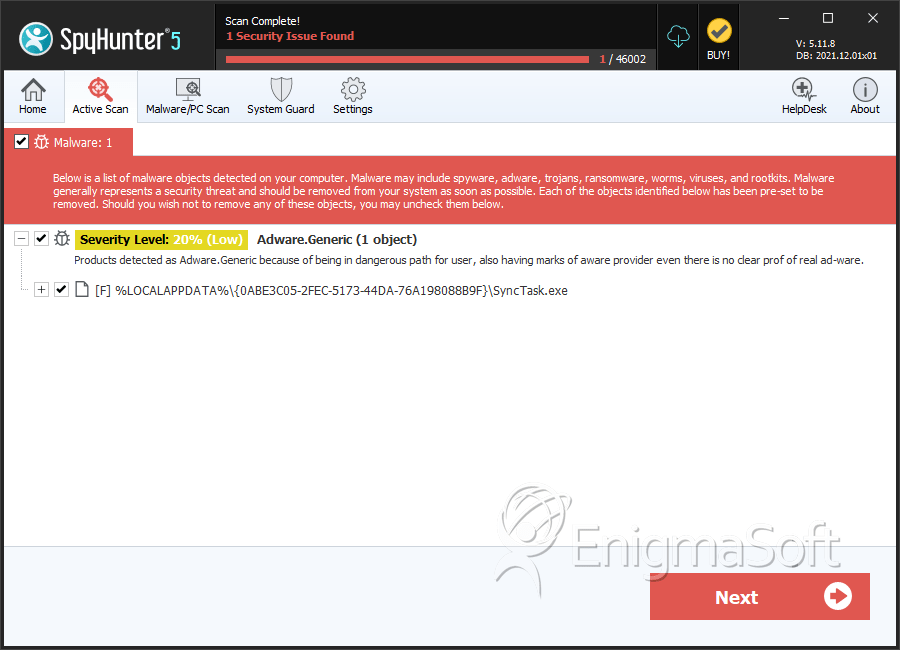
SpyHunter Detects & Remove Adware.Generic
File System Details
| # | File Name | MD5 |
Detections
Detections: The number of confirmed and suspected cases of a particular threat detected on
infected computers as reported by SpyHunter.
|
|---|---|---|---|
| 1. | ucmansvc.exe | 43eb012c143d8f9d3b9606bf7933a139 | 15,209 |
| 2. | SyncTask.exe | 2912fafcbdc6e9a0f884ab60dab37ec5 | 1 |