Trojan Generic29.ajge
Threat Scorecard
EnigmaSoft Threat Scorecard
EnigmaSoft Threat Scorecards are assessment reports for different malware threats which have been collected and analyzed by our research team. EnigmaSoft Threat Scorecards evaluate and rank threats using several metrics including real-world and potential risk factors, trends, frequency, prevalence, and persistence. EnigmaSoft Threat Scorecards are updated regularly based on our research data and metrics and are useful for a wide range of computer users, from end users seeking solutions to remove malware from their systems to security experts analyzing threats.
EnigmaSoft Threat Scorecards display a variety of useful information, including:
Popularity Rank: The ranking of a particular threat in EnigmaSoft’s Threat Database.
Severity Level: The determined severity level of an object, represented numerically, based on our risk modeling process and research, as explained in our Threat Assessment Criteria.
Infected Computers: The number of confirmed and suspected cases of a particular threat detected on infected computers as reported by SpyHunter.
See also Threat Assessment Criteria.
| Popularity Rank: | 3,915 |
| Threat Level: | 90 % (High) |
| Infected Computers: | 11,020 |
| First Seen: | April 29, 2013 |
| Last Seen: | November 25, 2025 |
| OS(es) Affected: | Windows |
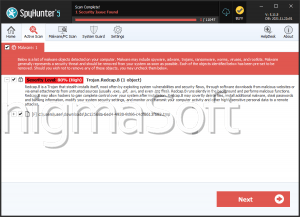
Trojan Generic29.ajge is a dangerous Trojan horse infection that is commonly loaded on vulnerable PCs. Through Trojan Generic29.ajge the master boot record could be manipulated causing the system to perform abnormally. The use of Trojan Generic29.ajge may be take advantage of by remote hackers where they could potentially gain access to an infected computer. Data stored on a system infected with Trojan Generic29.ajge is at risk. Removal of Trojan Generic29.ajge will ensure a system is not put a risk of having stored data stolen.
Table of Contents
Analysis Report
General information
| Family Name: | Trojan.Coinminer.AF |
|---|---|
| Signature status: | No Signature |
Known Samples
Known Samples
This section lists other file samples believed to be associated with this family.|
MD5:
986658d7883fb7946f15befd1d9498d9
SHA1:
2f0bfbade5d40864e706216a0041d30279686874
SHA256:
878286492CBF1393C9CFC24B3A09419E6F50FE05A9392591675F7F3571EB31C3
File Size:
3.50 MB, 3497472 bytes
|
Windows Portable Executable Attributes
- File doesn't have "Rich" header
- File doesn't have debug information
- File doesn't have exports table
- File doesn't have relocations information
- File doesn't have resources
- File doesn't have security information
- File has TLS information
- File is 64-bit executable
- File is console application (IMAGE_SUBSYSTEM_WINDOWS_CUI)
- File is either console or GUI application
Show More
- File is Native application (NOT .NET application)
- File is not packed
- IMAGE_FILE_DLL is not set inside PE header (Executable)
- IMAGE_FILE_EXECUTABLE_IMAGE is set inside PE header (Executable Image)
File Traits
- No Version Info
- x64
Block Information
Block Information
During analysis, EnigmaSoft breaks file samples into logical blocks for classification and comparison with other samples. Blocks can be used to generate malware detection rules and to group file samples into families based on shared source code, functionality and other distinguishing attributes and characteristics. This section lists a summary of this block data, as well as its classification by EnigmaSoft. A visual representation of the block data is also displayed, where available.| Total Blocks: | 19,639 |
|---|---|
| Potentially Malicious Blocks: | 1,769 |
| Whitelisted Blocks: | 17,309 |
| Unknown Blocks: | 561 |
Visual Map
? - Unknown Block
x - Potentially Malicious Block
Similar Families
Similar Families
This section lists other families that share similarities with this family, based on EnigmaSoft’s analysis. Many malware families are created from the same malware toolkits and use the same packing and encryption techniques but uniquely extend functionality. Similar families may also share source code, attributes, icons, subcomponents, compromised and/or invalid digital signatures, and network characteristics. Researchers leverage these similarities to rapidly and effectively triage file samples and extend malware detection rules.- Bitcoinminer.CB
Windows API Usage
Windows API Usage
This section lists Windows API calls that are used by the samples in this family. Windows API usage analysis is a valuable tool that can help identify malicious activity, such as keylogging, security privilege escalation, data encryption, data exfiltration, interference with antivirus software, and network request manipulation.| Category | API |
|---|---|
| Syscall Use |
Show More
|