HD-vi9.4v07.10
Threat Scorecard
EnigmaSoft Threat Scorecard
EnigmaSoft Threat Scorecards are assessment reports for different malware threats which have been collected and analyzed by our research team. EnigmaSoft Threat Scorecards evaluate and rank threats using several metrics including real-world and potential risk factors, trends, frequency, prevalence, and persistence. EnigmaSoft Threat Scorecards are updated regularly based on our research data and metrics and are useful for a wide range of computer users, from end users seeking solutions to remove malware from their systems to security experts analyzing threats.
EnigmaSoft Threat Scorecards display a variety of useful information, including:
Popularity Rank: The ranking of a particular threat in EnigmaSoft’s Threat Database.
Severity Level: The determined severity level of an object, represented numerically, based on our risk modeling process and research, as explained in our Threat Assessment Criteria.
Infected Computers: The number of confirmed and suspected cases of a particular threat detected on infected computers as reported by SpyHunter.
See also Threat Assessment Criteria.
| Popularity Rank: | 2,644 |
| Threat Level: | 10 % (Normal) |
| Infected Computers: | 5,553 |
| First Seen: | October 22, 2014 |
| Last Seen: | June 6, 2026 |
| OS(es) Affected: | Windows |
If when navigating the Web you start noticing the appearance of numerous advertisements displayed by HD-vi9.4v07.10, this means that your machine is housing an adware program. HD-vi9.4v07.10 advertisements may appear on any Web page you are logged in, and HD-vi9.4v07.10 may attach itself to Google Chrome, Internet Explorer and Mozilla Firefox. If you are wondering how HD-vi9.4v07.10 entered your computer without your interference, HD-vi9.4v07.10 may have been introduced into your machine when you downloaded a free program that had HD-vi9.4v07.10 bundled with its installation process. You will also notice that HD-vi9.4v07.10 advertisements will be on your way, and you may want to get rid of it. In this case, you should use an anti-malware device that will remove HD-vi9.4v07.10 and its unwanted components.
Table of Contents
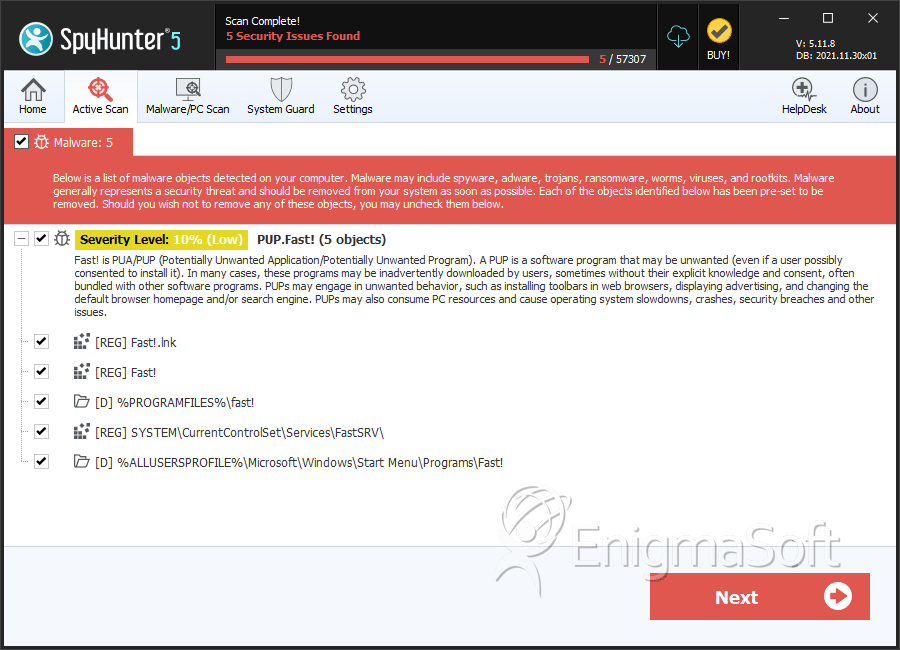
SpyHunter Detects & Remove HD-vi9.4v07.10
Registry Details
Directories
HD-vi9.4v07.10 may create the following directory or directories:
| %PROGRAMFILES%\fast! |
Analysis Report
General information
| Family Name: | PUP.Fast! |
|---|---|
| Signature status: | Self Signed |
Known Samples
Known Samples
This section lists other file samples believed to be associated with this family.|
MD5:
a223713fdae680d6c74e8c2e0aef2af7
SHA1:
edf36d3ed3c631b5409af2c7b5602198ddebb61e
SHA256:
D3F04744B2DB7A7E4C74A175C5EB978791367BB73CE830A557352B5E51F43FE0
File Size:
182.06 KB, 182056 bytes
|
|
MD5:
ee99999a8bcbceb798898c0e0d51cb62
SHA1:
4672f0174648fe5e261e443b04c980c648ee7bee
SHA256:
9F76F5D77B9B74CDE424991AEB4CE8A0CB42DF0DC37C7DE397C4DB76D260E955
File Size:
151.38 KB, 151376 bytes
|
|
MD5:
a2c8c57aee5f61a8d063ebd6e072b14e
SHA1:
bb96b15640e64ad83b7c42d598e3c5562ec2403d
SHA256:
CC83AEF38B071EC819D5689B8BE176A0C25B83F7AC0ADF69492FD8BD9BC6DA18
File Size:
104.98 KB, 104976 bytes
|
Windows Portable Executable Attributes
- File doesn't have "Rich" header
- File doesn't have debug information
- File doesn't have exports table
- File doesn't have relocations information
- File is 32-bit executable
- File is either console or GUI application
- File is GUI application (IMAGE_SUBSYSTEM_WINDOWS_GUI)
- File is Native application (NOT .NET application)
- File is not packed
- IMAGE_FILE_DLL is not set inside PE header (Executable)
Show More
- IMAGE_FILE_EXECUTABLE_IMAGE is set inside PE header (Executable Image)
File Icons
File Icons
This section displays icon resources found within family samples. Malware often replicates icons commonly associated with legitimate software to mislead users into believing the malware is safe.

Windows PE Version Information
Windows PE Version Information
This section displays values and attributes that have been set in the Windows file version information data structure for samples within this family. To mislead users, malware actors often add fake version information mimicking legitimate software.| Name | Value |
|---|---|
| Company Name |
|
| File Description | Setup |
| Legal Copyright |
|
| Product Name |
|
| Product Version |
|
Digital Signatures
Digital Signatures
This section lists digital signatures that are attached to samples within this family. When analyzing and verifying digital signatures, it is important to confirm that the signature’s root authority is a well-known and trustworthy entity and that the status of the signature is good. Malware is often signed with non-trustworthy “Self Signed” digital signatures (which can be easily created by a malware author with no verification). Malware may also be signed by legitimate signatures that have an invalid status, and by signatures from questionable root authorities with fake or misleading “Signer” names.| Signer | Root | Status |
|---|---|---|
| Fast Corporate LTD | DigiCert Trusted G4 Code Signing RSA4096 SHA384 2021 CA1 | Self Signed |
File Traits
- Installer Manifest
- Installer Version
- Nullsoft Installer
- x86
Files Modified
Files Modified
This section lists files that were created, modified, moved and/or deleted by samples in this family. File system activity can provide valuable insight into how malware functions on the operating system.| File | Attributes |
|---|---|
| c:\users\user\appdata\local\fast!\temp\temppostdata | Generic Write,Read Attributes |
| c:\users\user\appdata\local\temp\nsbd17d.tmp\system.dll | Generic Write,Read Attributes |
| c:\users\user\appdata\local\temp\nscbf04.tmp\image.gif | Generic Write,Read Attributes |
| c:\users\user\appdata\local\temp\nscbf04.tmp\system.dll | Generic Write,Read Attributes |
| c:\users\user\appdata\local\temp\nsm3a54.tmp\image.gif | Generic Write,Read Attributes |
| c:\users\user\appdata\local\temp\nsm3a54.tmp\nsjson.dll | Generic Write,Read Attributes |
| c:\users\user\appdata\local\temp\nsm3a54.tmp\system.dll | Generic Write,Read Attributes |
| c:\users\user\pcappstore\temp\temppostdata | Generic Write,Read Attributes |
Windows API Usage
Windows API Usage
This section lists Windows API calls that are used by the samples in this family. Windows API usage analysis is a valuable tool that can help identify malicious activity, such as keylogging, security privilege escalation, data encryption, data exfiltration, interference with antivirus software, and network request manipulation.| Category | API |
|---|---|
| Anti Debug |
|
| User Data Access |
|


