Adware.Novo
Threat Scorecard
EnigmaSoft Threat Scorecard
EnigmaSoft Threat Scorecards are assessment reports for different malware threats which have been collected and analyzed by our research team. EnigmaSoft Threat Scorecards evaluate and rank threats using several metrics including real-world and potential risk factors, trends, frequency, prevalence, and persistence. EnigmaSoft Threat Scorecards are updated regularly based on our research data and metrics and are useful for a wide range of computer users, from end users seeking solutions to remove malware from their systems to security experts analyzing threats.
EnigmaSoft Threat Scorecards display a variety of useful information, including:
Popularity Rank: The ranking of a particular threat in EnigmaSoft’s Threat Database.
Severity Level: The determined severity level of an object, represented numerically, based on our risk modeling process and research, as explained in our Threat Assessment Criteria.
Infected Computers: The number of confirmed and suspected cases of a particular threat detected on infected computers as reported by SpyHunter.
See also Threat Assessment Criteria.
| Threat Level: | 20 % (Normal) |
| Infected Computers: | 0 |
| First Seen: | July 24, 2009 |
| OS(es) Affected: | Windows |
The detection of Adware.Novo on your system indicates the presence of unwanted software that may be causing disruptions to your computing experience. Adware, in general, refers to programs that display unwanted advertisements, collect user data without consent, or redirect browsing activity for financial gain. Understanding the nature of Adware.Novo and taking appropriate steps to remove it is crucial for restoring your system's security and performance.
Table of Contents
What Is Adware.Novo?
Adware.Novo, as detected, falls under the category of potentially unwanted programs (PUPs) or adware. These types of programs are designed to generate revenue for their developers by displaying advertisements, promoting affiliated products, or collecting user data. While not inherently malicious like viruses or Trojans, adware can significantly degrade the user experience, compromise privacy, and potentially lead to more severe security issues if not addressed.
How Adware.Novo Operates
Adware.Novo, like other adware programs, operates by integrating itself into the system, often through bundled software installations, deceptive downloads, or exploits in software vulnerabilities. Once installed, it may alter browser settings, install additional toolbars or extensions, and display pop-up advertisements, banners, or sponsored content. The primary goal is to generate clicks or views on advertisements, which translate into revenue. However, this can lead to slower system performance, increased risk of exposure to malicious content, and invasion of user privacy through data collection.
Symptoms of Infection
Symptoms that your system might be infected with Adware.Novo include an unusual increase in pop-up ads, unexpected changes in your browser's homepage or search engine, the appearance of toolbars you didn't install, and general system slowdowns. You might also notice that your browser redirects to unwanted websites or that you're seeing more ads than usual, even when you're not browsing the internet. These symptoms indicate that your system is compromised and that taking action to remove the adware is necessary.
- Increased pop-up advertisements
- Unexplained changes to browser settings
- Appearance of unwanted toolbars or extensions
- System performance slowdowns
- Redirects to unwanted websites
How to Remove Adware.Novo
- Enter Safe Mode with Networking to prevent the adware from interfering with the removal process. This mode allows you to use the internet to download removal tools while limiting the adware's ability to run.
- Perform a full scan of your system using a reputable anti-malware tool, such as SpyHunter. These tools are designed to detect and remove adware, including Adware.Novo.
- Uninstall suspicious programs that you don't recognize or that were installed around the time your symptoms began. Be cautious and only remove programs you're sure are safe to uninstall.
- Reset your browsers (Chrome, Firefox, Edge, etc.) to their default settings. This step can help remove any changes made by the adware, such as altered homepages or search engines, and remove unwanted extensions.
- After completing the above steps, reboot your system and perform another scan to ensure that all traces of the adware have been removed.
Conclusion
Removing Adware.Novo from your system requires a systematic approach to ensure all components are eliminated. By following the steps outlined above, you can effectively remove the adware and restore your system's performance and security. Remember, prevention is key; always be cautious when downloading software, avoid suspicious links, and keep your antivirus and operating system up to date to protect against future infections.
SpyHunter Detects & Remove Adware.Novo
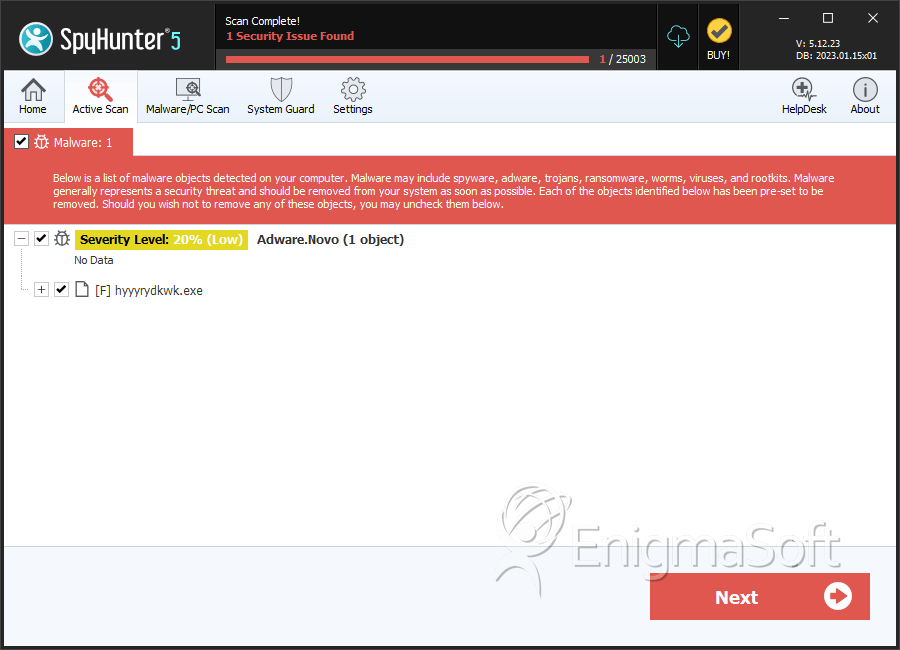
File System Details
| # | File Name | MD5 |
Detections
Detections: The number of confirmed and suspected cases of a particular threat detected on
infected computers as reported by SpyHunter.
|
|---|---|---|---|
| 1. | hyyyrydkwk.exe | 0c3494751a7223cc3044b465ac3eb049 | 0 |