Stop.HA Ransomware
Threat Scorecard
EnigmaSoft Threat Scorecard
EnigmaSoft Threat Scorecards are assessment reports for different malware threats which have been collected and analyzed by our research team. EnigmaSoft Threat Scorecards evaluate and rank threats using several metrics including real-world and potential risk factors, trends, frequency, prevalence, and persistence. EnigmaSoft Threat Scorecards are updated regularly based on our research data and metrics and are useful for a wide range of computer users, from end users seeking solutions to remove malware from their systems to security experts analyzing threats.
EnigmaSoft Threat Scorecards display a variety of useful information, including:
Popularity Rank: The ranking of a particular threat in EnigmaSoft’s Threat Database.
Severity Level: The determined severity level of an object, represented numerically, based on our risk modeling process and research, as explained in our Threat Assessment Criteria.
Infected Computers: The number of confirmed and suspected cases of a particular threat detected on infected computers as reported by SpyHunter.
See also Threat Assessment Criteria.
| Threat Level: | 100 % (High) |
| Infected Computers: | 1 |
| First Seen: | July 24, 2009 |
| OS(es) Affected: | Windows |
The detection of Stop.HA Ransomware on your system indicates a serious security threat that requires immediate attention. Ransomware is a type of malware designed to encrypt and hold your files for ransom, making it a significant concern for individuals and organizations alike. In this report, we will provide an overview of what Stop.HA Ransomware is, how it operates, the symptoms of infection, and most importantly, the steps you can take to remove it from your system.
Table of Contents
What Is Stop.HA Ransomware?
Stop.HA Ransomware is identified as a ransomware threat, which means its primary function is to encrypt your files and demand payment in exchange for the decryption key. Ransomware like Stop.HA Ransomware can enter your system through various means, including but not limited to, phishing emails, infected software downloads, and exploited vulnerabilities in your system or applications. Once inside, it can spread rapidly, encrypting files and potentially causing significant data loss if not addressed promptly.
How Stop.HA Ransomware Operates
Ransomware operates by using encryption algorithms to lock your files, making them inaccessible without the decryption key. Stop.HA Ransomware, like other ransomware, may display a ransom note demanding payment, usually in cryptocurrency, in exchange for the key to decrypt your files. The operators of such malware often threaten to delete the decryption key or increase the ransom if their demands are not met within a specified timeframe. It's crucial to understand that paying the ransom does not guarantee that you will receive the decryption key or that your files will be restored.
Symptoms of Infection
Symptoms of a Stop.HA Ransomware infection can include the inability to access your files, the appearance of ransom notes or demands for payment on your desktop or in folders where your files are located, and significant slowdowns in your system's performance. You might also notice unusual network activity or find that your antivirus software is disabled or not functioning correctly. Recognizing these symptoms early can help mitigate the damage caused by the ransomware.
How to Remove Stop.HA Ransomware
- Enter Safe Mode with Networking: Restart your computer and enter Safe Mode with Networking. This will allow you to use the internet while limiting the malware's ability to spread or interfere with your removal efforts.
- Perform a Full Scan with a Reputable Tool: Use a reputable anti-malware tool, such as SpyHunter, to perform a full scan of your system. This can help identify and remove the Stop.HA Ransomware and any other related malware.
- Uninstall Suspicious Programs: Go through your installed programs and uninstall anything that looks suspicious or unfamiliar. Be cautious and ensure you do not uninstall critical system files or programs.
- Reset Your Browsers: Reset your web browsers (Chrome, Firefox, Edge) to their default settings. This can help remove any malicious extensions or settings that the ransomware might have altered.
- Reboot and Re-scan: After completing the above steps, reboot your system and perform another full scan with your anti-malware tool to ensure that no remnants of the Stop.HA Ransomware are left on your system.
Conclusion
Removing Stop.HA Ransomware from your system requires careful and immediate action. By following the steps outlined above and maintaining vigilance in your online activities, you can help protect your system from future ransomware attacks. Remember, prevention is key, so ensuring your system and all applications are up-to-date, using strong antivirus software, and being cautious with emails and downloads can significantly reduce the risk of infection. If you are not comfortable with the removal process, consider seeking help from a professional to ensure your system is thoroughly cleaned and protected.
Aliases
7 security vendors flagged this file as malicious.
| Antivirus Vendor | Detection |
|---|---|
| McAfee-GW-Edition | Ad-Spyware.Shopper.V |
| K7AntiVirus | not-a-virus:AdWare.Win32.Shopper.U |
| Ikarus | not-a-virus:AdWare.Win32.Shopper.v |
| Comodo | Unclassified Malware |
| Authentium | W32/Shopper.A |
| AntiVir | ADSPY/Shopper.V |
| a-squared | Riskware.AdWare.Win32.Shopper.v!IK |
SpyHunter Detects & Remove Stop.HA Ransomware
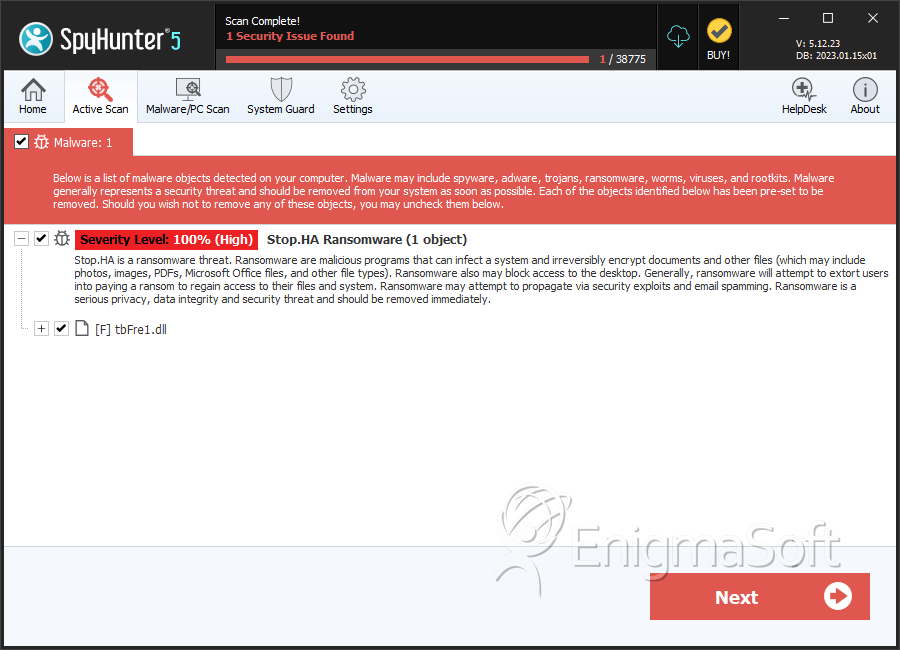
File System Details
| # | File Name | MD5 |
Detections
Detections: The number of confirmed and suspected cases of a particular threat detected on
infected computers as reported by SpyHunter.
|
|---|---|---|---|
| 1. | tbOnl1.dll | 1c6d8b0e5403bbcc71a293f79cb9559d | 1 |


