PUP.RegistryNuke 2014
Threat Scorecard
EnigmaSoft Threat Scorecard
EnigmaSoft Threat Scorecards are assessment reports for different malware threats which have been collected and analyzed by our research team. EnigmaSoft Threat Scorecards evaluate and rank threats using several metrics including real-world and potential risk factors, trends, frequency, prevalence, and persistence. EnigmaSoft Threat Scorecards are updated regularly based on our research data and metrics and are useful for a wide range of computer users, from end users seeking solutions to remove malware from their systems to security experts analyzing threats.
EnigmaSoft Threat Scorecards display a variety of useful information, including:
Popularity Rank: The ranking of a particular threat in EnigmaSoft’s Threat Database.
Severity Level: The determined severity level of an object, represented numerically, based on our risk modeling process and research, as explained in our Threat Assessment Criteria.
Infected Computers: The number of confirmed and suspected cases of a particular threat detected on infected computers as reported by SpyHunter.
See also Threat Assessment Criteria.
| Threat Level: | 10 % (Normal) |
| Infected Computers: | 14 |
| First Seen: | March 27, 2019 |
| Last Seen: | December 4, 2020 |
| OS(es) Affected: | Windows |
Your system has been detected with a potentially unwanted program (PUP) known as PUP.RegistryNuke 2014. This detection indicates that your computer may be at risk due to the presence of unwanted software that could compromise your system's security and performance. It's essential to understand the nature of this threat and take appropriate steps to remove it and protect your system.
Table of Contents
What Is PUP.RegistryNuke 2014?
PUP.RegistryNuke 2014 is classified as a potentially unwanted program, which means it is not necessarily malicious but can still cause problems for your computer. PUPs are often installed unintentionally by users, usually as part of another software installation. They can modify system settings, display unwanted advertisements, and collect user data without consent. Understanding that PUPs like PUP.RegistryNuke 2014 are not traditional viruses but can still negatively impact your computing experience is crucial for taking the right removal and prevention measures.
How PUP.RegistryNuke 2014 Operates
PUPs typically operate by integrating themselves into your system and altering settings to ensure their persistence. They might change your browser's homepage, default search engine, or install additional unwanted software. PUP.RegistryNuke 2014, like other PUPs, could be using various tactics to stay hidden and continue operating on your system without your knowledge or consent. Their operation often involves manipulating system files, registry entries, or exploiting vulnerabilities in software to maintain their presence.
Symptoms of Infection
Identifying a PUP infection can be challenging due to their often stealthy nature. However, common symptoms include an increase in unwanted advertisements (pop-ups, banners), unexpected changes in browser settings, slow system performance, and the presence of unfamiliar programs. If you've noticed any of these symptoms, it could indicate that your system is infected with PUP.RegistryNuke 2014 or another similar threat. Keeping an eye out for these signs can help in early detection and removal of potentially unwanted programs.
How to Remove PUP.RegistryNuke 2014
- Enter Safe Mode with Networking to limit the PUP's ability to interfere with the removal process. This mode allows you to use the internet to download necessary tools while restricting the execution of potentially unwanted programs.
- Perform a full scan of your system using a reputable anti-malware tool, such as SpyHunter. These tools are designed to detect and remove PUPs, including PUP.RegistryNuke 2014, by identifying and eliminating their components from your system.
- Uninstall any suspicious programs that you do not recognize or no longer need. Be cautious during the uninstallation process, as some PUPs may attempt to reinstall themselves or leave behind remnants.
- Reset your web browsers (Google Chrome, Mozilla Firefox, Microsoft Edge) to their default settings. This step helps in removing any unwanted extensions, homepages, or search engines that PUP.RegistryNuke 2014 might have installed.
- Reboot your system after completing the above steps to ensure all changes take effect, and then perform another scan to verify that the PUP has been successfully removed.
Conclusion
Removing PUP.RegistryNuke 2014 from your system requires careful attention to detail and the use of appropriate removal tools. By following the steps outlined above and maintaining vigilance against future infections, you can protect your system from the potential harm caused by PUPs. Regularly updating your software, being cautious with downloads, and using reputable security software can significantly reduce the risk of encountering PUP.RegistryNuke 2014 and other potentially unwanted programs in the future.
SpyHunter Detects & Remove PUP.RegistryNuke 2014
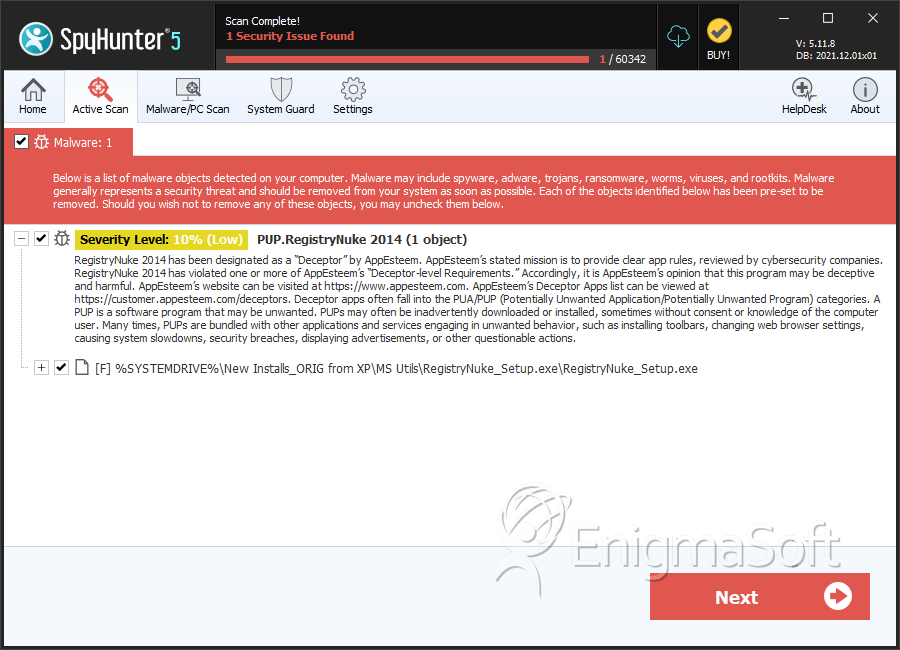
File System Details
| # | File Name | MD5 |
Detections
Detections: The number of confirmed and suspected cases of a particular threat detected on
infected computers as reported by SpyHunter.
|
|---|---|---|---|
| 1. | RegistryNuke_Setup.exe | 552f64fd5fb4a25ee5fbf84801921396 | 7 |