Petya.A Ransomware
Threat Scorecard
EnigmaSoft Threat Scorecard
EnigmaSoft Threat Scorecards are assessment reports for different malware threats which have been collected and analyzed by our research team. EnigmaSoft Threat Scorecards evaluate and rank threats using several metrics including real-world and potential risk factors, trends, frequency, prevalence, and persistence. EnigmaSoft Threat Scorecards are updated regularly based on our research data and metrics and are useful for a wide range of computer users, from end users seeking solutions to remove malware from their systems to security experts analyzing threats.
EnigmaSoft Threat Scorecards display a variety of useful information, including:
Popularity Rank: The ranking of a particular threat in EnigmaSoft’s Threat Database.
Severity Level: The determined severity level of an object, represented numerically, based on our risk modeling process and research, as explained in our Threat Assessment Criteria.
Infected Computers: The number of confirmed and suspected cases of a particular threat detected on infected computers as reported by SpyHunter.
See also Threat Assessment Criteria.
| Popularity Rank: | 21,287 |
| Threat Level: | 100 % (High) |
| Infected Computers: | 36 |
| First Seen: | April 26, 2017 |
| Last Seen: | September 11, 2026 |
| OS(es) Affected: | Windows |
The detection of Petya.A Ransomware on your system indicates a serious security threat that requires immediate attention. Ransomware is a type of malware that encrypts files on a victim's computer and demands a ransom in exchange for the decryption key. In this report, we will provide an overview of Petya.A Ransomware, its operating methods, symptoms of infection, and steps to remove the threat from your system.
Table of Contents
What Is Petya.A Ransomware?
Petya.A Ransomware is a type of malicious software that uses encryption to lock files on a computer, making them inaccessible to the user. The goal of the attackers is to extort money from the victim in exchange for the decryption key. Ransomware attacks can be devastating, resulting in significant financial losses and data breaches. It is essential to understand that paying the ransom does not guarantee that the attackers will provide the decryption key or that the files will be restored.
How Petya.A Ransomware Operates
Petya.A Ransomware typically spreads through phishing emails, exploited vulnerabilities, or infected software downloads. Once the malware infects a system, it begins to encrypt files, often using a combination of symmetric and asymmetric encryption algorithms. The attackers then demand a ransom, usually in cryptocurrency, in exchange for the decryption key. Petya.A Ransomware may also attempt to spread to other systems on the network, making it a significant threat to organizations and individuals alike.
Symptoms of Infection
Common symptoms of Petya.A Ransomware infection include: files being encrypted and inaccessible, ransom demands displayed on the screen, and system performance issues. In some cases, the malware may also delete or modify system files, leading to further complications. It is crucial to recognize these symptoms early on to minimize the damage and take prompt action to remove the threat.
How to Remove Petya.A Ransomware
- Boot your system in Safe Mode with Networking to prevent the malware from loading and to allow for internet access.
- Download and install a reputable anti-malware tool, such as SpyHunter, and perform a full scan of your system to detect and remove the malware.
- Uninstall any suspicious programs or applications that may be related to the infection.
- Reset your web browsers, including Chrome, Firefox, and Edge, to their default settings to remove any malicious extensions or add-ons.
- Reboot your system and perform another full scan with the anti-malware tool to ensure that the threat has been completely removed.
Conclusion
Removing Petya.A Ransomware from your system requires a combination of technical expertise and caution. It is essential to follow the steps outlined above and to seek professional help if you are unsure about any part of the process. Additionally, it is crucial to take preventive measures to avoid future ransomware attacks, such as regularly backing up important files, using strong antivirus software, and being cautious when opening emails or downloading software from the internet. By being proactive and taking the necessary steps, you can minimize the risk of infection and protect your sensitive data from falling into the wrong hands.
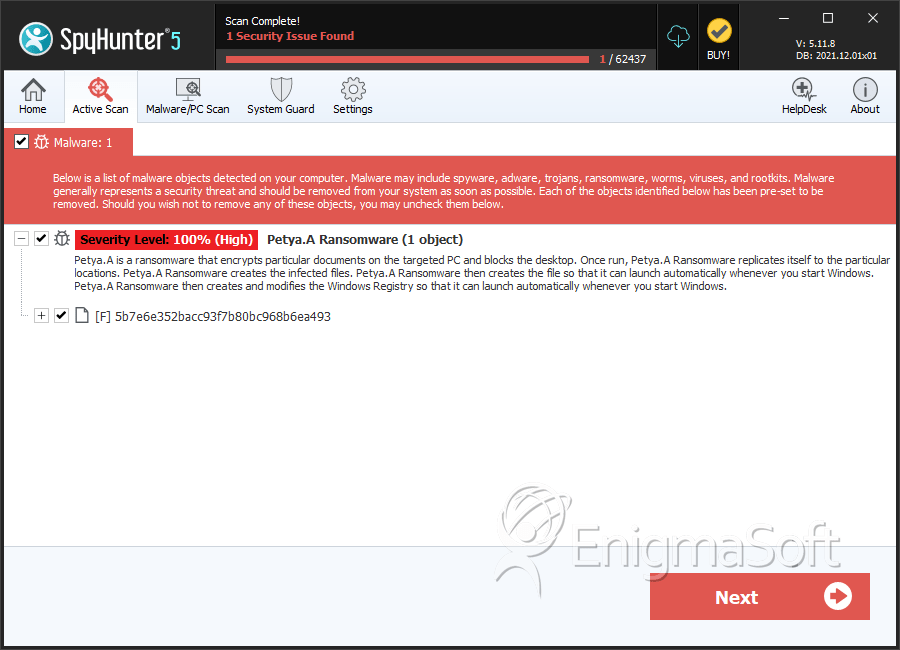
SpyHunter Detects & Remove Petya.A Ransomware
File System Details
| # | File Name | MD5 |
Detections
Detections: The number of confirmed and suspected cases of a particular threat detected on
infected computers as reported by SpyHunter.
|
|---|---|---|---|
| 1. | NotPetya[1].exe | 5b7e6e352bacc93f7b80bc968b6ea493 | 22 |


