Backdoor.CsgoInjector.GK
Threat Scorecard
EnigmaSoft Threat Scorecard
EnigmaSoft Threat Scorecards are assessment reports for different malware threats which have been collected and analyzed by our research team. EnigmaSoft Threat Scorecards evaluate and rank threats using several metrics including real-world and potential risk factors, trends, frequency, prevalence, and persistence. EnigmaSoft Threat Scorecards are updated regularly based on our research data and metrics and are useful for a wide range of computer users, from end users seeking solutions to remove malware from their systems to security experts analyzing threats.
EnigmaSoft Threat Scorecards display a variety of useful information, including:
Popularity Rank: The ranking of a particular threat in EnigmaSoft’s Threat Database.
Severity Level: The determined severity level of an object, represented numerically, based on our risk modeling process and research, as explained in our Threat Assessment Criteria.
Infected Computers: The number of confirmed and suspected cases of a particular threat detected on infected computers as reported by SpyHunter.
See also Threat Assessment Criteria.
| Popularity Rank: | 4,132 |
| Threat Level: | 60 % (Medium) |
| Infected Computers: | 186 |
| First Seen: | February 17, 2025 |
| Last Seen: | October 5, 2026 |
| OS(es) Affected: | Windows |
The detection of Backdoor.CsgoInjector.GK on your system indicates a potential security threat that requires immediate attention. This backdoor threat can compromise the security and integrity of your computer, allowing unauthorized access and potentially leading to further malware infections. It is essential to understand the nature of this threat and take prompt action to remove it and prevent future infections.
Table of Contents
What Is Backdoor.CsgoInjector.GK?
Backdoor.CsgoInjector.GK is a type of malware that creates a secret doorway into your computer system, allowing hackers to remotely access and control your machine without your knowledge or consent. This backdoor can be used to steal sensitive information, install additional malware, or disrupt the normal functioning of your computer. The name "CsgoInjector" suggests a possible connection to the popular online game Counter-Strike: Global Offensive, but it is crucial to note that the exact nature and origins of this malware are not explicitly defined by its detection name.
How Backdoor.CsgoInjector.GK Operates
Backdoor.CsgoInjector.GK, like other backdoor malware, operates by exploiting vulnerabilities in software or using social engineering tactics to trick users into installing it. Once installed, it can communicate with its command and control servers to receive instructions, which may include downloading and installing additional malware, stealing data, or using the infected computer as a botnet node. The malware may also attempt to hide its presence by disguising itself as a legitimate program or process, making it challenging to detect without proper security tools.
Symptoms of Infection
The symptoms of a Backdoor.CsgoInjector.GK infection can be subtle and may not immediately indicate the presence of malware. However, some common signs include unusual network activity, slow computer performance, unexpected changes to system settings, or the appearance of unfamiliar programs or files. In some cases, the malware may cause system crashes, freezes, or display suspicious error messages. It is essential to be vigilant and monitor your system's behavior regularly to identify potential security threats early.
How to Remove Backdoor.CsgoInjector.GK
- Boot your computer in Safe Mode with Networking to prevent the malware from loading and to allow for a clean environment to perform removal steps.
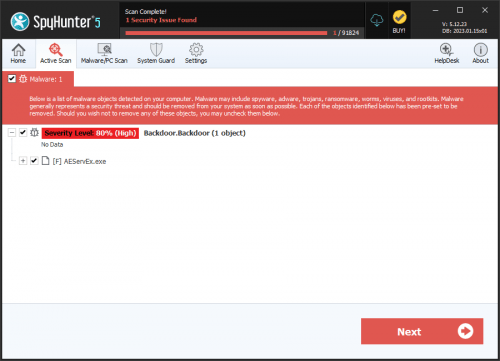
- Use a reputable anti-malware tool, such as SpyHunter, to perform a full scan of your system. This will help identify and remove all components of the Backdoor.CsgoInjector.GK malware.
- Uninstall any suspicious programs or applications that you do not recognize or that were installed around the time the malware was detected.
- Reset your web browsers, including Chrome, Firefox, and Edge, to their default settings to remove any malicious extensions or settings that the malware may have altered.
- Reboot your computer and perform another full scan with your anti-malware tool to ensure that all remnants of the malware have been removed.
Conclusion
Removing Backdoor.CsgoInjector.GK requires a combination of technical knowledge and the right tools. By following the steps outlined above and maintaining good security practices, such as keeping your operating system and software up to date, using strong antivirus software, and being cautious when opening email attachments or downloading files from the internet, you can significantly reduce the risk of future infections. Remember, the key to protecting your digital assets is vigilance and proactive security measures. Stay informed, stay safe.
Analysis Report
General information
| Family Name: | Backdoor.CsgoInjector.GK |
|---|---|
| Signature status: | No Signature |
Known Samples
Known Samples
This section lists other file samples believed to be associated with this family.|
MD5:
f07c5aab3b968272bb733ec71bf0f8ef
SHA1:
730ac4ebf1a74c37dccebc50dc062dc87fb919f7
SHA256:
03C73C4EA7D83870CB71C40E9E6A7AB525F5E8B65A1D6C8657EE0441982369EB
File Size:
723.46 KB, 723456 bytes
|
|
MD5:
d218030e2e9484601d1d226845a616ad
SHA1:
518369df0d7b08b84a049bb7e94b02a628ab17cb
SHA256:
B3EE921CC1EE3D548EF179E5C8D17154AF96FDBDBA3DF05E63546F5AC874F76B
File Size:
421.38 KB, 421376 bytes
|
|
MD5:
bbf28999904af4ef67466e17a62c8707
SHA1:
54d42f8562facf16c21c3afc934d9704fe28ca67
SHA256:
F9CD6F021C08F88AD079950AE4D894DD4391F1AF9B88BF6886276140C2545633
File Size:
3.08 MB, 3079680 bytes
|
|
MD5:
e78ef6a36a28510b8d039abf635f1a6c
SHA1:
8ce83508c7a2ab76f0b633d17a1a247df0b1a2b5
SHA256:
0139A1758F584FD316B5C1B59B81A3F1FD26EE4AE3F9BC4880C54FD1F9FA1706
File Size:
1.78 MB, 1784832 bytes
|
|
MD5:
3f2d64182d518afcec2fb0b967b0198e
SHA1:
c9474c0739b33833fd682bf433625f23d15c52dd
SHA256:
411DCA3AC855D2FC8D581D55ADA598BC4C5C1F9EA3857C78EA865D527C778347
File Size:
1.45 MB, 1451008 bytes
|
Show More
|
MD5:
cbe4536544607302653cd8b246ab4a54
SHA1:
1d36c150800dc56f5cd79ffcd555cdfe72853bfc
SHA256:
EAF76BE8596A00F064AD195E067901CF3970232C5F8C678327D7C298FD1A4BF0
File Size:
983.95 KB, 983952 bytes
|
|
MD5:
825098e4339277440030215ecfc804dc
SHA1:
59bea38d07b7fc7f23cb2e893cd847de0f0f9c23
SHA256:
F00DBE1142FDDAA2B20CB09934D42103653ECEA42DE4950DA767300055D1D59F
File Size:
654.34 KB, 654336 bytes
|
|
MD5:
3fa7e21379cf8051cfe41f0939c763a8
SHA1:
88889f7c222df4a76bea4f157d47cedacb431583
SHA256:
EFEC82DAE6B66F7C1DEA329A4AF4A6EB92523560E239AC68EDD9B1F5C5262A7C
File Size:
1.07 MB, 1067008 bytes
|
|
MD5:
c157ea282a14b95aebc8e8513d53eec5
SHA1:
8d41ce8e91c28786c00eea543d7a1008329e401a
SHA256:
87AA53EC3E78B855C5FD3A19716E08F1351C36918299F489339CD48E41D347FD
File Size:
320.51 KB, 320512 bytes
|
|
MD5:
e3788ab6becc36297f2b85c3b1fd48b9
SHA1:
7615b4459848dab9222e0fed4833f788ef04366d
SHA256:
EF37C1657659441A64486F9EE8DC563ED958E356660BF56558A335D178CBA0C4
File Size:
416.77 KB, 416768 bytes
|
|
MD5:
90ea30273da44f428274bd00347353cf
SHA1:
519ef6e2d5a3dc31afea94989c9686f44bccec9a
SHA256:
EF912D5B0F64F8DE7D2DFF47B7ADF6A158805AEFD24DCE1E4739443F3086C065
File Size:
881.15 KB, 881152 bytes
|
|
MD5:
5800c69dcee04f6265e6663d6fead485
SHA1:
ddfe126e8515ac297bda8c8c1b082809b9be6b3c
SHA256:
C1DC428DBFBAD810EB257C08C9EDEB7A7C60F9A2CB0DC4B716F586EA8CBB8607
File Size:
1.06 MB, 1059328 bytes
|
|
MD5:
b592b4495a14824814b06d8df74e4df9
SHA1:
2f7eab2ed7a243f70ac384f51a4ec882990a1a46
SHA256:
E4F520267C7FA33A4645A2ABF3FD32336A51590A2EB988B3A405B7FC3DABDCB4
File Size:
466.94 KB, 466944 bytes
|
|
MD5:
1b677d82ad3d270cf6216f33d4119666
SHA1:
308c848faee8fa632419126dcad0269fd6d7ad28
SHA256:
F7299574021AF8FD011B926DC79BB3A4A70B08FE094842E99DC2855117A249A4
File Size:
1.18 MB, 1176576 bytes
|
|
MD5:
a76be9bbb225290f070b18ea46004d0e
SHA1:
c3452dfe017f1461553ac61f6088fca7a0ffa9d5
SHA256:
BA9ADDCDE1E3700895A0BE01EB53CCE8E0DAB0CF958AB9A2B120E093F0E4195D
File Size:
1.93 MB, 1931776 bytes
|
|
MD5:
f0194bb7faf4e04f672802a50543c44a
SHA1:
b2d7c40d54979718bf98124c2034585973a10741
SHA256:
757B9DE20AF3746EFFD803EBFDAF953A6FB315D7234AC53EB02E35FC3408AE4D
File Size:
1.01 MB, 1005456 bytes
|
|
MD5:
6abafc1db233f4d5302f13674d595dfb
SHA1:
ce20841ab8c0b6c46ec6ff000bb14653d1eb0649
SHA256:
6D593658912BE04310CE5DA03430A1D35241CF13A0D7813FAAF5DB4756562ADD
File Size:
3.92 MB, 3920896 bytes
|
|
MD5:
ed15ec35db94da82455c3ccdef864a4e
SHA1:
14b85c27029938946d621866f7fb4d5ca303a468
SHA256:
606122AFC6D1826EB77C2A4C92A5C64988415025E3B66D659AB2291ECB887A86
File Size:
865.79 KB, 865792 bytes
|
Windows Portable Executable Attributes
- File doesn't have "Rich" header
- File doesn't have exports table
- File doesn't have resources
- File doesn't have security information
- File has exports table
- File has TLS information
- File is 64-bit executable
- File is console application (IMAGE_SUBSYSTEM_WINDOWS_CUI)
- File is either console or GUI application
- File is GUI application (IMAGE_SUBSYSTEM_WINDOWS_GUI)
Show More
- File is Native application (NOT .NET application)
- File is not packed
- IMAGE_FILE_DLL is not set inside PE header (Executable)
- IMAGE_FILE_EXECUTABLE_IMAGE is set inside PE header (Executable Image)
File Icons
File Icons
This section displays icon resources found within family samples. Malware often replicates icons commonly associated with legitimate software to mislead users into believing the malware is safe.


Digital Signatures
Digital Signatures
This section lists digital signatures that are attached to samples within this family. When analyzing and verifying digital signatures, it is important to confirm that the signature’s root authority is a well-known and trustworthy entity and that the status of the signature is good. Malware is often signed with non-trustworthy “Self Signed” digital signatures (which can be easily created by a malware author with no verification). Malware may also be signed by legitimate signatures that have an invalid status, and by signatures from questionable root authorities with fake or misleading “Signer” names.| Signer | Root | Status |
|---|---|---|
| Yura | Yura | Self Signed |
File Traits
- big overlay
- dll
- fptable
- GetConsoleWindow
- HighEntropy
- imgui
- No Version Info
- ntdll
- VirtualQueryEx
- WriteProcessMemory
Show More
- x64
Block Information
Block Information
During analysis, EnigmaSoft breaks file samples into logical blocks for classification and comparison with other samples. Blocks can be used to generate malware detection rules and to group file samples into families based on shared source code, functionality and other distinguishing attributes and characteristics. This section lists a summary of this block data, as well as its classification by EnigmaSoft. A visual representation of the block data is also displayed, where available.| Total Blocks: | 2,459 |
|---|---|
| Potentially Malicious Blocks: | 109 |
| Whitelisted Blocks: | 2,315 |
| Unknown Blocks: | 35 |
Visual Map
? - Unknown Block
x - Potentially Malicious Block
Similar Families
Similar Families
This section lists other families that share similarities with this family, based on EnigmaSoft’s analysis. Many malware families are created from the same malware toolkits and use the same packing and encryption techniques but uniquely extend functionality. Similar families may also share source code, attributes, icons, subcomponents, compromised and/or invalid digital signatures, and network characteristics. Researchers leverage these similarities to rapidly and effectively triage file samples and extend malware detection rules.- Gamehack.GAIG
- Gamehack.PS
Windows API Usage
Windows API Usage
This section lists Windows API calls that are used by the samples in this family. Windows API usage analysis is a valuable tool that can help identify malicious activity, such as keylogging, security privilege escalation, data encryption, data exfiltration, interference with antivirus software, and network request manipulation.| Category | API |
|---|---|
| Syscall Use |
Show More
109 additional items are not displayed above. |
| Keyboard Access |
|