Virus.Bamital.V
Threat Scorecard
EnigmaSoft Threat Scorecard
EnigmaSoft Threat Scorecards are assessment reports for different malware threats which have been collected and analyzed by our research team. EnigmaSoft Threat Scorecards evaluate and rank threats using several metrics including real-world and potential risk factors, trends, frequency, prevalence, and persistence. EnigmaSoft Threat Scorecards are updated regularly based on our research data and metrics and are useful for a wide range of computer users, from end users seeking solutions to remove malware from their systems to security experts analyzing threats.
EnigmaSoft Threat Scorecards display a variety of useful information, including:
Popularity Rank: The ranking of a particular threat in EnigmaSoft’s Threat Database.
Severity Level: The determined severity level of an object, represented numerically, based on our risk modeling process and research, as explained in our Threat Assessment Criteria.
Infected Computers: The number of confirmed and suspected cases of a particular threat detected on infected computers as reported by SpyHunter.
See also Threat Assessment Criteria.
| Threat Level: | 80 % (High) |
| Infected Computers: | 14 |
| First Seen: | December 20, 2012 |
| Last Seen: | February 18, 2019 |
| OS(es) Affected: | Windows |
The detection of Virus.Bamital.V on your system indicates a potential threat to your computer's security and integrity. This report aims to provide you with a comprehensive understanding of the threat, its operational characteristics, symptoms of infection, and most importantly, steps to remove it from your system. It is crucial to address this issue promptly to prevent any further damage or unauthorized access to your personal data.
Table of Contents
What Is Virus.Bamital.V?
Virus.Bamital.V is identified as a Trojan-type threat, which means it is designed to deceive users into installing it on their systems by disguising itself as legitimate software. Once installed, it can cause a variety of problems, including data theft, unauthorized access, and disruption of system operations. The name itself does not directly indicate a specific malware family, but its behavior and impact suggest it operates similarly to other Trojan horses by exploiting vulnerabilities in software or human psychology to gain unauthorized access to computer systems.
How Virus.Bamital.V Operates
Trojan horses like Virus.Bamital.V typically operate by creating a backdoor on the infected computer, allowing attackers to access the system remotely. They can be used to steal sensitive information, install additional malware, or even use the infected computer as part of a botnet for malicious activities such as spamming or distributed denial-of-service (DDoS) attacks. These threats often exploit trust in seemingly legitimate applications or files, tricking users into executing them, which then install the malware without the user's knowledge or consent.
Symptoms of Infection
Symptoms of a Virus.Bamital.V infection can vary but may include unusual system behavior such as slow performance, frequent crashes, or unfamiliar programs running in the background. You might also notice changes in your browser settings, unexpected pop-ups, or suspicious network activity. Sometimes, the infection might not exhibit overt symptoms, making it difficult to detect without proper security software. It is essential to be vigilant and monitor your system's behavior regularly to catch any potential threats early.
How to Remove Virus.Bamital.V
- Enter Safe Mode with Networking: This will help prevent the malware from loading and interfering with the removal process. Restart your computer and press the key to access your boot menu (this varies by manufacturer but is often F12, F2, or Del). Select the option to boot into Safe Mode with Networking.
- Perform a Full Scan with a Reputable Tool: Use a reputable anti-malware tool such as SpyHunter to scan your system thoroughly. Ensure your antivirus and anti-malware software are updated before running the scan to detect the latest threats.
- Uninstall Suspicious Programs: Go through your installed programs and uninstall any that you do not recognize or that were installed around the time you suspect the infection occurred.
- Reset Your Browsers: Resetting browsers like Chrome, Firefox, or Edge can help remove any malicious extensions or settings changes made by the malware. Each browser has a reset option typically found in its settings or preferences menu.
- Reboot and Re-scan: After completing the above steps, reboot your computer to ensure all changes take effect and then run another full scan with your anti-malware tool to confirm that Virus.Bamital.V has been successfully removed.
Conclusion
Removing Virus.Bamital.V requires careful and systematic steps to ensure the malware is completely eradicated from your system. It is also a reminder of the importance of maintaining good cybersecurity practices, including keeping your operating system and software up to date, using strong and unique passwords, and being cautious when clicking on links or installing software from the internet. By following the removal steps outlined and staying vigilant, you can protect your computer and personal data from threats like Virus.Bamital.V and maintain a secure online environment.
Aliases
15 security vendors flagged this file as malicious.
| Antivirus Vendor | Detection |
|---|---|
| AVG | Win32/Patched |
| GData | Win32:Rootkit-gen |
| AntiVir | TR/Crypt.EPACK.Gen2 |
| Avast | Win32:Rootkit-gen [Rtk] |
| AVG | Generic30.BQYZ |
| Ikarus | Trojan-Ransom.Win32.Blocker |
| AntiVir | TR/Rogue.KD.815376 |
| Kaspersky | Trojan-Ransom.Win32.Blocker.aapw |
| McAfee | Artemis!171C108A7D1B |
| Panda | Trj/CI.A |
| Fortinet | W32/SPYEYE.GER!tr |
| Ikarus | Trojan.SuspectCRC |
| AhnLab-V3 | Dropper/Malware.122928.J |
| AntiVir | TR/Gendal.KD.300509.1 |
| Comodo | Heur.Suspicious |
SpyHunter Detects & Remove Virus.Bamital.V
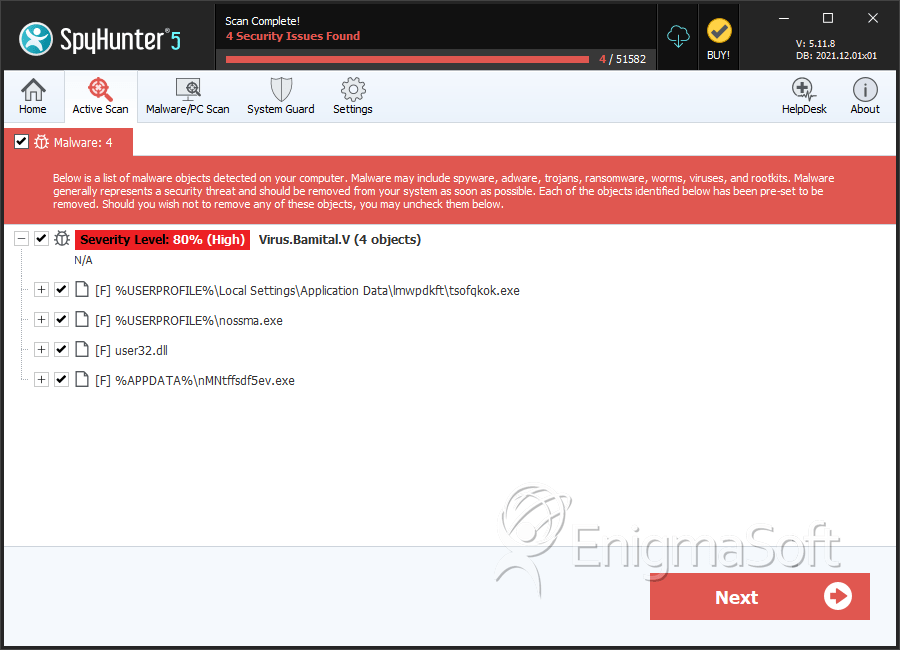
File System Details
| # | File Name | MD5 |
Detections
Detections: The number of confirmed and suspected cases of a particular threat detected on
infected computers as reported by SpyHunter.
|
|---|---|---|---|
| 1. | tsofqkok.exe | 9d914ebf1f56434ef85926940d28e0fc | 4 |
| 2. | nossma.exe | 171c108a7d1b7df705638ae736c68635 | 3 |
| 3. | nMNtffsdf5ev.exe | 3bf70d3f1737c77d07bb7e9f1b254c1f | 1 |
| 4. | user32.dll | 3df9da452d53321a411603c932426ba9 | 1 |


