Trojan.Ransom.DV
Threat Scorecard
EnigmaSoft Threat Scorecard
EnigmaSoft Threat Scorecards are assessment reports for different malware threats which have been collected and analyzed by our research team. EnigmaSoft Threat Scorecards evaluate and rank threats using several metrics including real-world and potential risk factors, trends, frequency, prevalence, and persistence. EnigmaSoft Threat Scorecards are updated regularly based on our research data and metrics and are useful for a wide range of computer users, from end users seeking solutions to remove malware from their systems to security experts analyzing threats.
EnigmaSoft Threat Scorecards display a variety of useful information, including:
Popularity Rank: The ranking of a particular threat in EnigmaSoft’s Threat Database.
Severity Level: The determined severity level of an object, represented numerically, based on our risk modeling process and research, as explained in our Threat Assessment Criteria.
Infected Computers: The number of confirmed and suspected cases of a particular threat detected on infected computers as reported by SpyHunter.
See also Threat Assessment Criteria.
| Threat Level: | 80 % (High) |
| Infected Computers: | 13 |
| First Seen: | January 2, 2013 |
| Last Seen: | November 10, 2019 |
| OS(es) Affected: | Windows |
The detection of Trojan.Ransom.DV indicates that your system has been compromised by a type of malicious software designed to extort money from you by encrypting your files and demanding payment in exchange for the decryption key. This type of threat is particularly dangerous as it can lead to significant data loss and financial consequences if not handled properly.
Table of Contents
What Is Trojan.Ransom.DV?
Trojan.Ransom.DV is a type of ransomware, a category of malware that encrypts a victim's files or locks their device and demands a ransom in exchange for the decryption key or unlock code. The term "Trojan" refers to the method of delivery, where the malware disguises itself as legitimate software to gain unauthorized access to a computer system. The "Ransom.DV" part of the name indicates its ransomware component, highlighting its ability to demand payment in exchange for restoring access to encrypted data.
How Trojan.Ransom.DV Operates
Ransomware like Trojan.Ransom.DV typically operates by first gaining access to a system, often through phishing emails, exploited vulnerabilities in software, or infected software downloads. Once inside, it scans the system for target files, which can include documents, images, videos, and other data types. It then encrypts these files using a complex algorithm, making them inaccessible to the user. A ransom note is usually left on the system, explaining the situation and providing instructions on how to pay the ransom to obtain the decryption key.
Symptoms of Infection
Symptoms of a Trojan.Ransom.DV infection can include the inability to access files, files having unusual extensions appended to their names, and the presence of a ransom note or demand for payment. The system may also behave sluggishly due to the encryption process consuming system resources. In some cases, the malware may also attempt to spread to other devices connected to the same network or through external drives.
- Files become inaccessible or are encrypted with unusual extensions.
- Appearance of ransom notes or demands for payment.
- Slow system performance.
- Possible spread to other connected devices or external drives.
How to Remove Trojan.Ransom.DV
- Boot your computer in Safe Mode with Networking to prevent the malware from loading and to allow for internet access to download removal tools.
- Download and run a full scan with a reputable anti-malware tool, such as SpyHunter, to detect and remove the malware. Ensure the tool is updated with the latest definitions.
- Uninstall any suspicious programs that were installed around the time of the infection. This can help remove any additional malware components.
- Reset your web browsers (Chrome, Firefox, Edge) to their default settings to remove any malicious extensions or settings changes made by the malware.
- After completing the above steps, reboot your computer and run another full scan with your anti-malware tool to ensure all components of the malware have been removed.
Conclusion
Removing Trojan.Ransom.DV requires careful and immediate action to minimize data loss and prevent further damage. It's crucial to act quickly but methodically, following established removal procedures and using reputable security tools. Preventing future infections involves keeping your operating system and software up to date, using strong antivirus software, avoiding suspicious downloads and email attachments, and regularly backing up important data. By taking these steps, you can protect your system from ransomware and other types of malware, ensuring the security and integrity of your data.
Aliases
15 security vendors flagged this file as malicious.
| Antivirus Vendor | Detection |
|---|---|
| AVG | Win32/CryptExe |
| Fortinet | W32/Tibs.WA!tr |
| Ikarus | not-a-virus:Monitor.Win32.FamilyKeyLogger |
| Symantec | Spyware.FamilyKeylog |
| McAfee-GW-Edition | Heuristic.LooksLike.Win32.SuspiciousPE.C |
| Comodo | Heur.Pck.EXECryptor |
| BitDefender | MemScan:Application.Spyarsenal.Familykeylogger.B |
| Kaspersky | not-a-virus:Monitor.Win32.FamilyKeyLogger.a |
| a-squared | Riskware.Monitor.Win32.FamilyKeyLogger!IK |
| NOD32 | a variant of Win32/KeyLogger.FamilyKeyLogger.C |
| AVG | Generic30.BGUK |
| Fortinet | W32/Lebag.A!tr |
| TrendMicro | PAK_Generic.005 |
| Sophos | Mal/Azber-A |
| Kaspersky | Trojan.Win32.Lebag.tkz |
SpyHunter Detects & Remove Trojan.Ransom.DV
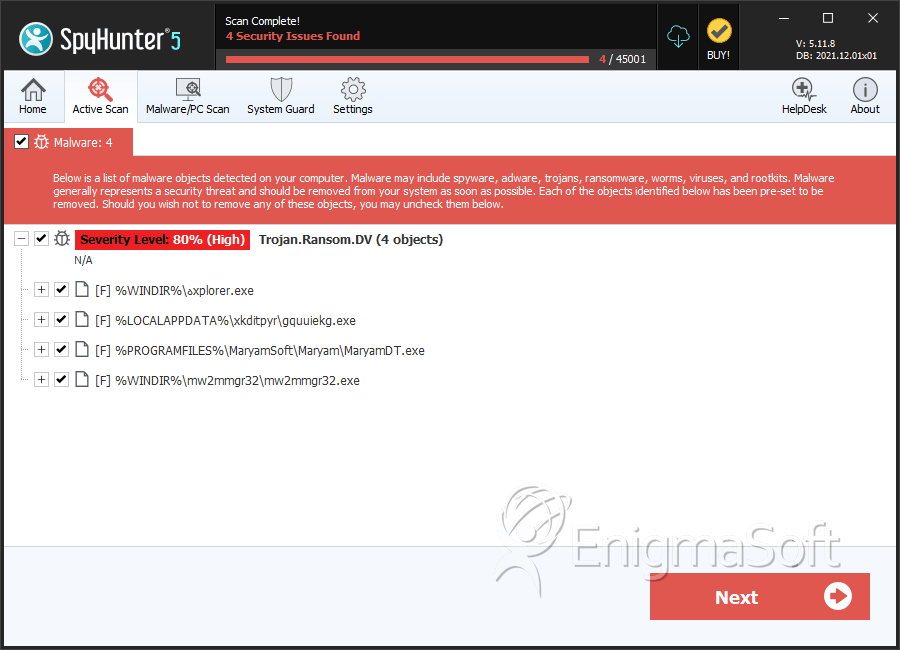
File System Details
| # | File Name | MD5 |
Detections
Detections: The number of confirmed and suspected cases of a particular threat detected on
infected computers as reported by SpyHunter.
|
|---|---|---|---|
| 1. | هxplorer.exe | b0bad8f94235704a63f79efe063baeb0 | 5 |
| 2. | gquuiekg.exe | ec876afe6b17925065d74e43d725a4c7 | 4 |
| 3. | MaryamDT.exe | f098eda2c8fcdbc88c6cfa89a73ab0b3 | 2 |
| 4. | mw2mmgr32.exe | 02c18b6febfcf4cc8a40bf59c07b2a09 | 1 |