Trojan.Fuery
Threat Scorecard
EnigmaSoft Threat Scorecard
EnigmaSoft Threat Scorecards are assessment reports for different malware threats which have been collected and analyzed by our research team. EnigmaSoft Threat Scorecards evaluate and rank threats using several metrics including real-world and potential risk factors, trends, frequency, prevalence, and persistence. EnigmaSoft Threat Scorecards are updated regularly based on our research data and metrics and are useful for a wide range of computer users, from end users seeking solutions to remove malware from their systems to security experts analyzing threats.
EnigmaSoft Threat Scorecards display a variety of useful information, including:
Popularity Rank: The ranking of a particular threat in EnigmaSoft’s Threat Database.
Severity Level: The determined severity level of an object, represented numerically, based on our risk modeling process and research, as explained in our Threat Assessment Criteria.
Infected Computers: The number of confirmed and suspected cases of a particular threat detected on infected computers as reported by SpyHunter.
See also Threat Assessment Criteria.
| Threat Level: | 80 % (High) |
| Infected Computers: | 131 |
| First Seen: | May 22, 2018 |
| Last Seen: | January 28, 2020 |
| OS(es) Affected: | Windows |
The detection of Trojan.Fuery on your system indicates a potential security threat that requires immediate attention. Trojan-type threats are known for their ability to disguise themselves as legitimate programs, making them difficult to detect without proper security software. In this report, we will provide an overview of what Trojan.Fuery is, how it operates, the symptoms of infection, and most importantly, the steps to remove it from your system.
Table of Contents
What Is Trojan.Fuery?
Trojan.Fuery, as indicated by its name, is classified as a Trojan-type threat. This means it is a malicious program designed to allow unauthorized access to a computer system. Trojans can be used to steal sensitive information, install additional malware, or provide a backdoor for remote access by an attacker. The name itself does not specify a known malware family, but its classification as a Trojan gives us insight into its potential capabilities and risks.
How Trojan.Fuery Operates
Trojan.Fuery, like other Trojans, operates by deceiving users into installing it on their systems. This can happen through various means, such as downloading software from untrusted sources, opening malicious email attachments, or clicking on links to compromised websites. Once installed, it can execute a range of malicious activities, from data theft to facilitating additional malware infections. The specific operations of Trojan.Fuery would depend on its design and the intentions of its creators, but its presence is a clear indicator of a security breach.
Symptoms of Infection
The symptoms of a Trojan.Fuery infection can vary widely, depending on its primary function and the extent of the infection. Common symptoms include, but are not limited to, unusual system behavior, unexpected changes in system settings, appearance of unwanted programs or toolbars, slow system performance, and frequent crashes. Additionally, users might notice increased network activity without an apparent cause, or they might be redirected to suspicious websites while browsing. Since Trojans can be designed to remain stealthy, some infections might not exhibit noticeable symptoms, making regular system scans crucial for detection.
How to Remove Trojan.Fuery
Removing Trojan.Fuery requires a systematic approach to ensure all components of the malware are eliminated from the system. Here are the steps to follow:
- Boot your computer in Safe Mode with Networking. This will limit the malware's ability to interfere with the removal process.
- Download and install a reputable anti-malware tool, such as SpyHunter, if you haven't already. Perform a full scan of your system to detect and remove all malicious components.
- Uninstall any suspicious programs that you do not recognize or that were installed around the time the malware was detected.
- Reset your web browsers (Chrome, Firefox, Edge, etc.) to their default settings. This can help remove any malicious extensions or settings changes made by the Trojan.
- Reboot your computer and perform another full scan with your anti-malware tool to ensure all threats have been removed.
Conclusion
The detection and removal of Trojan.Fuery are critical steps in securing your computer system and protecting your personal data. By understanding the nature of Trojan-type threats and following the outlined removal procedure, you can effectively eliminate this malware from your system. It's also important to adopt preventive measures, such as regularly updating your operating system and software, using strong antivirus protection, and being cautious when downloading and installing programs from the internet. Remember, vigilance and proactive security practices are key to maintaining a safe and secure computing environment.
SpyHunter Detects & Remove Trojan.Fuery
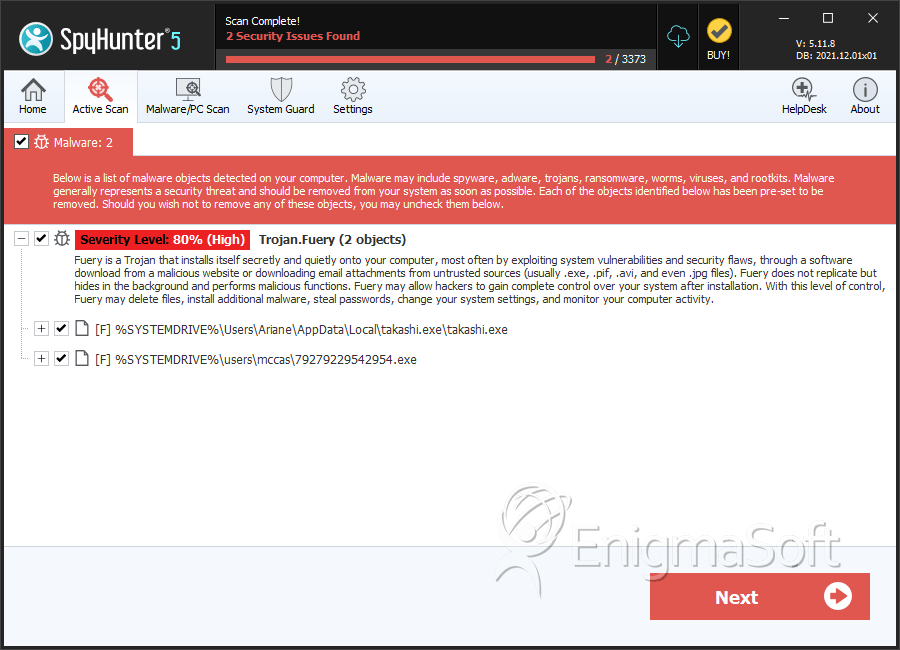
File System Details
| # | File Name | MD5 |
Detections
Detections: The number of confirmed and suspected cases of a particular threat detected on
infected computers as reported by SpyHunter.
|
|---|---|---|---|
| 1. | takashi.exe | 466de99b9ea238a1f0f4aa57edb35828 | 106 |
| 2. | 79279229542954.exe | 983abe3fafba2034a08d643feedd6136 | 5 |


