Speeddialsearch.com
Threat Scorecard
EnigmaSoft Threat Scorecard
EnigmaSoft Threat Scorecards are assessment reports for different malware threats which have been collected and analyzed by our research team. EnigmaSoft Threat Scorecards evaluate and rank threats using several metrics including real-world and potential risk factors, trends, frequency, prevalence, and persistence. EnigmaSoft Threat Scorecards are updated regularly based on our research data and metrics and are useful for a wide range of computer users, from end users seeking solutions to remove malware from their systems to security experts analyzing threats.
EnigmaSoft Threat Scorecards display a variety of useful information, including:
Popularity Rank: The ranking of a particular threat in EnigmaSoft’s Threat Database.
Severity Level: The determined severity level of an object, represented numerically, based on our risk modeling process and research, as explained in our Threat Assessment Criteria.
Infected Computers: The number of confirmed and suspected cases of a particular threat detected on infected computers as reported by SpyHunter.
See also Threat Assessment Criteria.
| Popularity Rank: | 8,672 |
| Threat Level: | 10 % (Normal) |
| Infected Computers: | 9,941 |
| First Seen: | March 7, 2016 |
| Last Seen: | October 3, 2026 |
| OS(es) Affected: | Windows |
The detection of Speeddialsearch.com on your system indicates a potential threat to your computer's security and privacy. This report provides an overview of the threat, its operating methods, symptoms of infection, and steps to remove it from your system. It is essential to address this issue promptly to prevent further damage or data compromise.
Table of Contents
What Is Speeddialsearch.com?
Speeddialsearch.com is identified as a Trojan-type threat, which is a broad category of malware designed to deceive users about its true intent. Trojans can be used for various malicious purposes, including data theft, spyware, and ransomware. The name Speeddialsearch.com suggests it might be related to modifying browser settings or search functions, but without specific details, it's crucial to approach removal with a comprehensive strategy.
How Speeddialsearch.com Operates
Trojan-type threats like Speeddialsearch.com typically operate by exploiting vulnerabilities in software or tricking users into installing them. Once installed, they can execute a wide range of malicious activities, from stealing sensitive information to downloading additional malware. These threats often disguise themselves as legitimate programs or hide within other software, making them challenging to detect without proper security tools.
Their operation can involve altering system settings, hijacking browser home pages or search engines, and displaying unwanted advertisements. In some cases, they might also open backdoors for remote access, allowing attackers to control the infected system. Understanding how these threats operate is key to effectively removing them and preventing future infections.
Symptoms of Infection
Symptoms of a Speeddialsearch.com infection can vary but commonly include changes to browser settings, such as a new home page or default search engine, that you did not set. You might also notice an increase in pop-up ads, slower system performance, or unfamiliar programs installed on your computer. Sometimes, the presence of malware can be indicated by frequent system crashes or the failure of certain applications to launch properly.
Given the deceptive nature of Trojan-type threats, some infections might not display obvious symptoms, making regular system scans with reputable security software a crucial practice for early detection and removal.
How to Remove Speeddialsearch.com
- Enter Safe Mode with Networking to limit the malware's ability to interfere with the removal process. This mode allows you to use the internet to download necessary tools while minimizing system activity.
- Perform a full scan of your system using a reputable anti-malware tool, such as SpyHunter. Ensure the tool is updated to the latest version to maximize its effectiveness against current threats.
- Uninstall suspicious programs that you do not recognize or that were installed around the time the malware was detected. Be cautious and only remove programs you are certain are not needed for your system's operation.
- Reset your browser settings for Chrome, Firefox, Edge, or any other browser that may have been affected. This step will revert any changes made by the malware, such as altering the home page or search engine. Additionally, consider clearing browsing history, cookies, and cache to remove any potential malware remnants.
- After completing the above steps, reboot your system and perform another scan to ensure that the threat has been fully removed. This final scan is crucial for verifying the system's cleanliness and identifying any potential leftovers that might have been missed during the initial removal process.
Conclusion
Removing Speeddialsearch.com from your system requires a thorough approach to ensure all components of the malware are eliminated. By following the steps outlined in this report and maintaining vigilance through regular system scans and safe browsing practices, you can protect your computer from similar threats in the future. Remember, prevention is key, so always be cautious when downloading software, opening email attachments, or clicking on links from unknown sources.
SpyHunter Detects & Remove Speeddialsearch.com
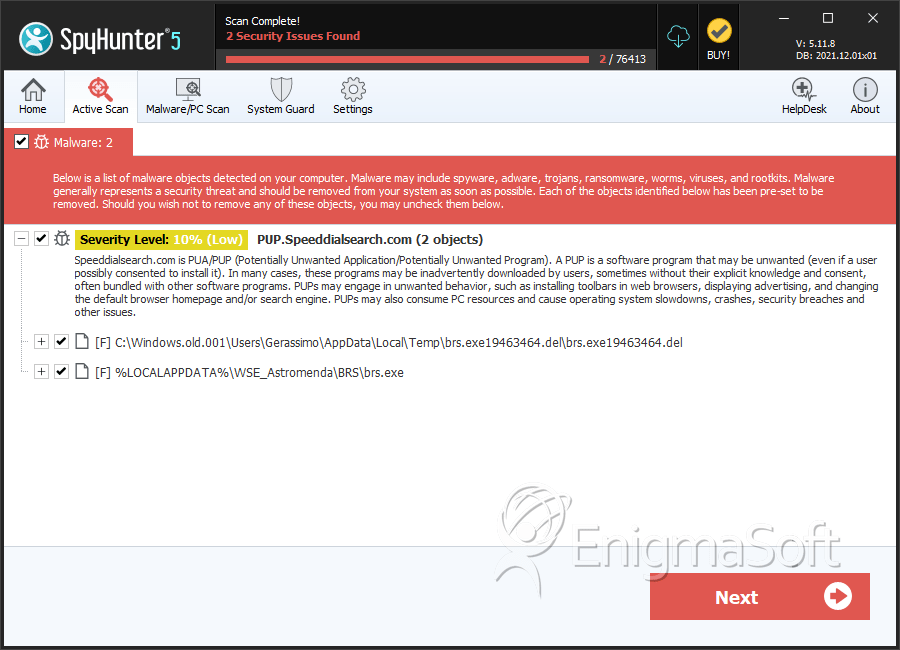
File System Details
| # | File Name | MD5 |
Detections
Detections: The number of confirmed and suspected cases of a particular threat detected on
infected computers as reported by SpyHunter.
|
|---|---|---|---|
| 1. | brs.exe1020558.del | e32564509be981759ef689772be9a05f | 2,941 |
| 2. | brs.exe19463464.del | e4dfa084e2e845bc7c13ff76a9c674e6 | 636 |
| 3. | brs.exe | 1adacc0a148c3f13f408877812052fe8 | 95 |
URLs
Speeddialsearch.com may call the following URLs:
| addonsearch.net |
Analysis Report
General information
| Family Name: | PUP.Speeddialsearch.com |
|---|---|
| Signature status: | No Signature |
Known Samples
Known Samples
This section lists other file samples believed to be associated with this family.|
MD5:
a0ea72dc66e1af87c878993fc6b900de
SHA1:
fed83d0c0efdee9853f63d0da77c04a2ecbd8855
SHA256:
61206BA57843CA90584BD310B919BCD5123F3BCB55AF3BCD41BA0F6DF3304DED
File Size:
51.71 KB, 51712 bytes
|
|
MD5:
b85b73e606e575b835a95c57a8582941
SHA1:
a3a96cbeac16a5e9dfa56ecb2bb8b39152c1d65d
SHA256:
098FCE04286C389E17A6AF54FDE2E9B9CF80DE1AA99001E2D84A37BBD4C9BF1F
File Size:
51.71 KB, 51712 bytes
|
Windows Portable Executable Attributes
- File doesn't have "Rich" header
- File doesn't have exports table
- File doesn't have security information
- File is .NET application
- File is 32-bit executable
- File is either console or GUI application
- File is GUI application (IMAGE_SUBSYSTEM_WINDOWS_GUI)
- File is not packed
- IMAGE_FILE_DLL is not set inside PE header (Executable)
- IMAGE_FILE_EXECUTABLE_IMAGE is set inside PE header (Executable Image)
File Icons
File Icons
This section displays icon resources found within family samples. Malware often replicates icons commonly associated with legitimate software to mislead users into believing the malware is safe.

Windows PE Version Information
Windows PE Version Information
This section displays values and attributes that have been set in the Windows file version information data structure for samples within this family. To mislead users, malware actors often add fake version information mimicking legitimate software.| Name | Value |
|---|---|
| Assembly Version |
|
| Company Name | Microsoft |
| File Description | Swfast.Integrador.Windows |
| File Version |
|
| Internal Name | Integrador Balança.exe |
| Legal Copyright | Copyright © Microsoft 2013 |
| Original Filename | Integrador Balança.exe |
| Product Name | Swfast.Integrador.Windows |
| Product Version |
|
File Traits
- .NET
- NewLateBinding
- x86
Block Information
Block Information
During analysis, EnigmaSoft breaks file samples into logical blocks for classification and comparison with other samples. Blocks can be used to generate malware detection rules and to group file samples into families based on shared source code, functionality and other distinguishing attributes and characteristics. This section lists a summary of this block data, as well as its classification by EnigmaSoft. A visual representation of the block data is also displayed, where available.| Total Blocks: | 35 |
|---|---|
| Potentially Malicious Blocks: | 0 |
| Whitelisted Blocks: | 23 |
| Unknown Blocks: | 12 |
Visual Map
? - Unknown Block
x - Potentially Malicious Block
Windows API Usage
Windows API Usage
This section lists Windows API calls that are used by the samples in this family. Windows API usage analysis is a valuable tool that can help identify malicious activity, such as keylogging, security privilege escalation, data encryption, data exfiltration, interference with antivirus software, and network request manipulation.| Category | API |
|---|---|
| User Data Access |
|
| Anti Debug |
|


