PUP.Secure Driver Updater
Threat Scorecard
EnigmaSoft Threat Scorecard
EnigmaSoft Threat Scorecards are assessment reports for different malware threats which have been collected and analyzed by our research team. EnigmaSoft Threat Scorecards evaluate and rank threats using several metrics including real-world and potential risk factors, trends, frequency, prevalence, and persistence. EnigmaSoft Threat Scorecards are updated regularly based on our research data and metrics and are useful for a wide range of computer users, from end users seeking solutions to remove malware from their systems to security experts analyzing threats.
EnigmaSoft Threat Scorecards display a variety of useful information, including:
Popularity Rank: The ranking of a particular threat in EnigmaSoft’s Threat Database.
Severity Level: The determined severity level of an object, represented numerically, based on our risk modeling process and research, as explained in our Threat Assessment Criteria.
Infected Computers: The number of confirmed and suspected cases of a particular threat detected on infected computers as reported by SpyHunter.
See also Threat Assessment Criteria.
| Popularity Rank: | 17,516 |
| Threat Level: | 10 % (Normal) |
| Infected Computers: | 5,430 |
| First Seen: | January 29, 2018 |
| Last Seen: | August 13, 2026 |
| OS(es) Affected: | Windows |
Your system has been detected with PUP.Secure Driver Updater, a potentially unwanted program that may pose risks to your computer's security and performance. This detection indicates that your system may be compromised, and it's essential to take immediate action to remove the threat and prevent further damage.
Table of Contents
What Is PUP.Secure Driver Updater?
PUP.Secure Driver Updater is a type of potentially unwanted program (PUP) that may have been installed on your system without your knowledge or consent. PUPs are software programs that may not be malicious in nature but can still cause problems with your system, such as slowing it down, displaying unwanted advertisements, or collecting your personal data. The name "Secure Driver Updater" suggests that the program may claim to update or manage drivers on your system, but its actual behavior may be different from its advertised purpose.
How PUP.Secure Driver Updater Operates
PUPs like PUP.Secure Driver Updater often operate by exploiting vulnerabilities in your system or by using deceptive tactics to gain access to your computer. They may be bundled with other software programs, or they may be downloaded from the internet through fake or misleading advertisements. Once installed, PUPs can run in the background, consuming system resources, collecting data, or displaying unwanted content. They may also attempt to trick you into purchasing unnecessary software or services, or they may redirect you to malicious websites.
Symptoms of Infection
If your system is infected with PUP.Secure Driver Updater, you may experience a range of symptoms, including slow system performance, unwanted advertisements or pop-ups, unfamiliar programs or icons on your desktop, or suspicious activity in your system logs. You may also notice that your browser settings have been changed, or that your search results are being redirected to unfamiliar websites. In some cases, PUPs can also cause system crashes, freezes, or errors.
How to Remove PUP.Secure Driver Updater
- Boot your system in Safe Mode with Networking to prevent the PUP from running and to allow you to download and install removal tools.
- Download and install a reputable anti-malware tool, such as SpyHunter, and run a full scan of your system to detect and remove the PUP and any associated malware.
- Uninstall any suspicious programs or applications that you do not recognize or that you did not intentionally install.
- Reset your web browsers, including Chrome, Firefox, and Edge, to their default settings to remove any unwanted extensions or add-ons.
- Reboot your system and run another scan with your anti-malware tool to ensure that the PUP and any associated malware have been completely removed.
Conclusion
Removing PUP.Secure Driver Updater from your system requires careful attention to detail and a thorough understanding of the removal process. By following the steps outlined above, you can help to ensure that your system is free from this potentially unwanted program and any associated malware. Remember to always be cautious when downloading software from the internet, and to never install programs that you do not trust or that you did not intentionally download. By taking these precautions, you can help to protect your system and your personal data from potential threats.
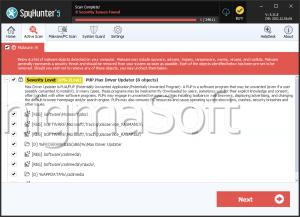
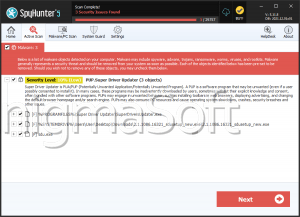
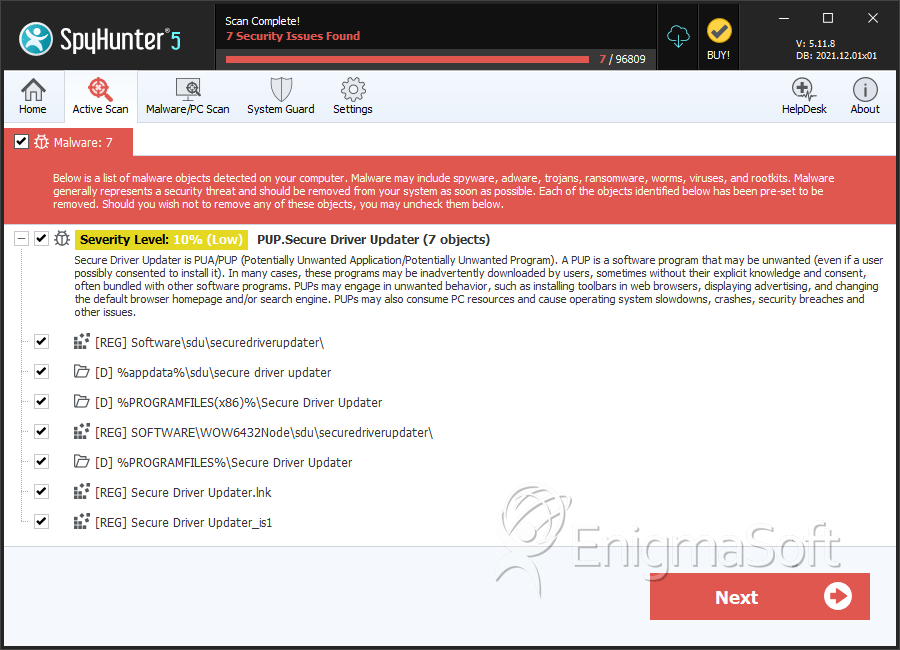
SpyHunter Detects & Remove PUP.Secure Driver Updater
Registry Details
Directories
PUP.Secure Driver Updater may create the following directory or directories:
| %PROGRAMFILES%\Secure Driver Updater |
| %appdata%\sdu\secure driver updater |
Analysis Report
General information
| Family Name: | PUP.Secure Driver Updater |
|---|---|
| Signature status: | Self Signed |
Known Samples
Known Samples
This section lists other file samples believed to be associated with this family.|
MD5:
b5ed0f676981fc3f647d1483a07f7e2c
SHA1:
0d570f56e9aaa02f805d9e3f5671167a0fdf4957
SHA256:
5BC2A92E1503477FE45C4661EC3718FF6986B953DD5FE3F87DAF9AE593FE4548
File Size:
157.63 KB, 157632 bytes
|
Windows Portable Executable Attributes
- File doesn't have "Rich" header
- File doesn't have debug information
- File has exports table
- File is 32-bit executable
- File is either console or GUI application
- File is GUI application (IMAGE_SUBSYSTEM_WINDOWS_GUI)
- File is Native application (NOT .NET application)
- File is not packed
- IMAGE_FILE_DLL is not set inside PE header (Executable)
- IMAGE_FILE_EXECUTABLE_IMAGE is set inside PE header (Executable Image)
Windows PE Version Information
Windows PE Version Information
This section displays values and attributes that have been set in the Windows file version information data structure for samples within this family. To mislead users, malware actors often add fake version information mimicking legitimate software.| Name | Value |
|---|---|
| Comments | http://www.istool.org/ |
| Company Name | Bjørnar Henden |
| File Description | Download DLL |
| File Version | 5, 1, 5, 0 |
| Internal Name | isxdl |
| Legal Copyright | Copyright © 2002-2005 |
| Original Filename | isxdl.dll |
| Product Name | ISX Download DLL |
| Product Version | 5, 1, 5, 0 |
Digital Signatures
Digital Signatures
This section lists digital signatures that are attached to samples within this family. When analyzing and verifying digital signatures, it is important to confirm that the signature’s root authority is a well-known and trustworthy entity and that the status of the signature is good. Malware is often signed with non-trustworthy “Self Signed” digital signatures (which can be easily created by a malware author with no verification). Malware may also be signed by legitimate signatures that have an invalid status, and by signatures from questionable root authorities with fake or misleading “Signer” names.| Signer | Root | Status |
|---|---|---|
| SYS SECURE PC SOFTWARE LLP | Symantec Class 3 SHA256 Code Signing CA | Self Signed |
Block Information
Block Information
During analysis, EnigmaSoft breaks file samples into logical blocks for classification and comparison with other samples. Blocks can be used to generate malware detection rules and to group file samples into families based on shared source code, functionality and other distinguishing attributes and characteristics. This section lists a summary of this block data, as well as its classification by EnigmaSoft. A visual representation of the block data is also displayed, where available.| Total Blocks: | 620 |
|---|---|
| Potentially Malicious Blocks: | 40 |
| Whitelisted Blocks: | 580 |
| Unknown Blocks: | 0 |
Visual Map
? - Unknown Block
x - Potentially Malicious Block
Windows API Usage
Windows API Usage
This section lists Windows API calls that are used by the samples in this family. Windows API usage analysis is a valuable tool that can help identify malicious activity, such as keylogging, security privilege escalation, data encryption, data exfiltration, interference with antivirus software, and network request manipulation.| Category | API |
|---|---|
| Syscall Use |
Show More
|
| Process Manipulation Evasion |
|
| Process Shell Execute |
|
| Anti Debug |
|
Shell Command Execution
Shell Command Execution
This section lists Windows shell commands that are run by the samples in this family. Windows Shell commands are often leveraged by malware for nefarious purposes and can be used to elevate security privileges, download and launch other malware, exploit vulnerabilities, collect and exfiltrate data, and hide malicious activity.
C:\WINDOWS\SysWOW64\rundll32.exe C:\WINDOWS\system32\rundll32.exe c:\users\user\downloads\0d570f56e9aaa02f805d9e3f5671167a0fdf4957_0000157632.,LiQMAxHB
|