Genetik
Threat Scorecard
EnigmaSoft Threat Scorecard
EnigmaSoft Threat Scorecards are assessment reports for different malware threats which have been collected and analyzed by our research team. EnigmaSoft Threat Scorecards evaluate and rank threats using several metrics including real-world and potential risk factors, trends, frequency, prevalence, and persistence. EnigmaSoft Threat Scorecards are updated regularly based on our research data and metrics and are useful for a wide range of computer users, from end users seeking solutions to remove malware from their systems to security experts analyzing threats.
EnigmaSoft Threat Scorecards display a variety of useful information, including:
Popularity Rank: The ranking of a particular threat in EnigmaSoft’s Threat Database.
Severity Level: The determined severity level of an object, represented numerically, based on our risk modeling process and research, as explained in our Threat Assessment Criteria.
Infected Computers: The number of confirmed and suspected cases of a particular threat detected on infected computers as reported by SpyHunter.
See also Threat Assessment Criteria.
| Threat Level: | 20 % (Normal) |
| Infected Computers: | 0 |
| First Seen: | July 24, 2009 |
| OS(es) Affected: | Windows |
The detection of Genetik on your system indicates a potential threat to your computer's security and integrity. It is essential to understand the nature of this threat and take immediate action to remove it and prevent further damage. In this report, we will provide you with an overview of Genetik, its operating methods, symptoms of infection, and a step-by-step guide on how to remove it from your system.
Table of Contents
What Is Genetik?
Genetik is a type of Trojan-type threat, which means it is a malicious program designed to deceive users into installing it on their systems. Once installed, it can cause significant harm, including data theft, system compromise, and disruption of normal computer operations. Trojan-type threats like Genetik are often disguised as legitimate software or embedded in seemingly harmless files, making them difficult to detect without proper security measures.
How Genetik Operates
Genetik operates by exploiting vulnerabilities in system security or user behavior. It may use social engineering tactics to trick users into installing it, or it may be embedded in pirated software, infected email attachments, or compromised websites. Once installed, Genetik can communicate with its command and control servers to receive instructions, download additional malware, or transmit stolen data. It may also attempt to disable security software, create backdoors for remote access, or modify system settings to maintain persistence.
Symptoms of Infection
Symptoms of Genetik infection can vary, but common indicators include slow system performance, frequent crashes, unexpected pop-ups, or unfamiliar programs running in the background. You may also notice unusual network activity, changes to your homepage or search engine, or suspicious emails being sent from your account. In some cases, Genetik may not exhibit any noticeable symptoms, making it challenging to detect without regular system scans and monitoring.
- Unexplained changes to system settings or files
- Increased CPU usage or disk activity
- Appearance of unfamiliar icons, shortcuts, or programs
- Difficulty accessing certain websites or online services
How to Remove Genetik
- Boot your system in Safe Mode with Networking to prevent Genetik from loading and to allow for easier removal.
- Download and install a reputable anti-malware tool, such as SpyHunter, and perform a full system scan to detect and remove Genetik and any associated malware.
- Uninstall any suspicious programs or applications that may be related to Genetik, taking care to remove all associated files and registry entries.
- Reset your web browsers, including Chrome, Firefox, and Edge, to their default settings to remove any malicious extensions or add-ons.
- Reboot your system and perform a follow-up scan with your anti-malware tool to ensure that Genetik has been completely removed.
Conclusion
Removing Genetik from your system requires careful attention to detail and a thorough understanding of its operating methods. By following the steps outlined in this report, you can effectively remove Genetik and prevent future infections. It is essential to remain vigilant and maintain regular system scans, updates, and backups to protect your computer and personal data from emerging threats. Remember to always prioritize caution when installing new software, opening email attachments, or clicking on links from unknown sources to minimize the risk of infection.
Aliases
7 security vendors flagged this file as malicious.
| Antivirus Vendor | Detection |
|---|---|
| Sophos | Generic Proxy-OSS Application |
| Prevx1 | Low Risk Adware |
| McAfee | potentially unwanted program Proxy-OSS |
| Fortinet | Misc/Oss |
| Comodo | Unclassified Malware |
| NOD32 | probably a variant of Win32/Genetik |
| Fortinet | suspicious |
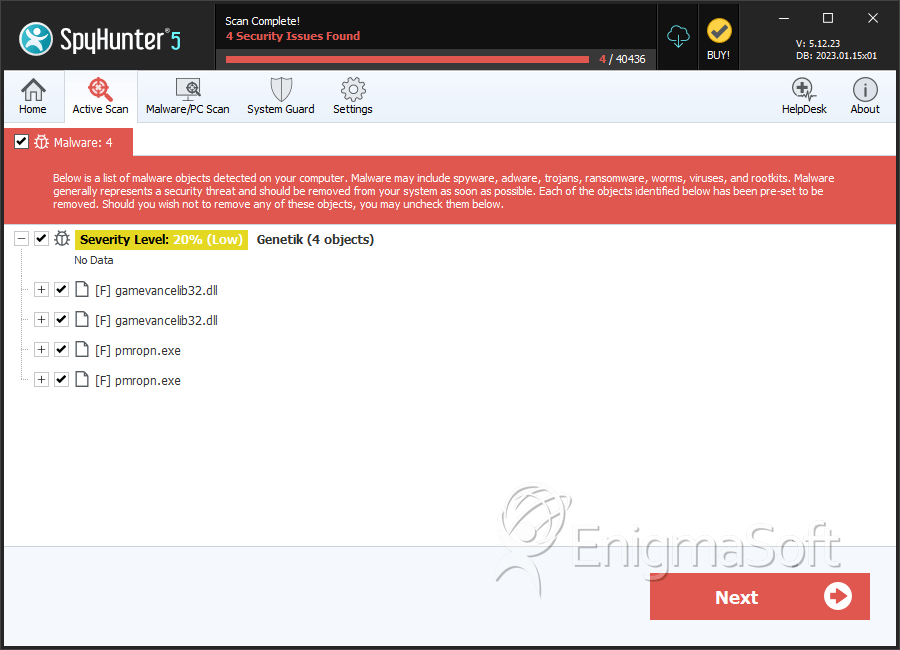
SpyHunter Detects & Remove Genetik
File System Details
| # | File Name | MD5 |
Detections
Detections: The number of confirmed and suspected cases of a particular threat detected on
infected computers as reported by SpyHunter.
|
|---|---|---|---|
| 1. | gamevancelib32.dll | 666f44d6f7171b646eb156a52ae23675 | 0 |
| 2. | pmropn.exe | 218b079e348d6767211a5be22f3bf2a7 | 0 |


