DogPile Web search
Threat Scorecard
EnigmaSoft Threat Scorecard
EnigmaSoft Threat Scorecards are assessment reports for different malware threats which have been collected and analyzed by our research team. EnigmaSoft Threat Scorecards evaluate and rank threats using several metrics including real-world and potential risk factors, trends, frequency, prevalence, and persistence. EnigmaSoft Threat Scorecards are updated regularly based on our research data and metrics and are useful for a wide range of computer users, from end users seeking solutions to remove malware from their systems to security experts analyzing threats.
EnigmaSoft Threat Scorecards display a variety of useful information, including:
Popularity Rank: The ranking of a particular threat in EnigmaSoft’s Threat Database.
Severity Level: The determined severity level of an object, represented numerically, based on our risk modeling process and research, as explained in our Threat Assessment Criteria.
Infected Computers: The number of confirmed and suspected cases of a particular threat detected on infected computers as reported by SpyHunter.
See also Threat Assessment Criteria.
| Popularity Rank: | 1,321 |
| Threat Level: | 50 % (Medium) |
| Infected Computers: | 114,788 |
| First Seen: | July 24, 2009 |
| Last Seen: | October 3, 2026 |
| OS(es) Affected: | Windows |
The detection of DogPile Web search on your system indicates a potential security threat that requires immediate attention. This report provides an overview of the threat, its operating methods, symptoms of infection, and steps to remove it from your system.
Table of Contents
What Is DogPile Web search?
DogPile Web search is identified as a Trojan-type threat, which is a broad category of malware designed to deceive users into installing it on their systems. Unlike viruses, Trojans do not replicate themselves but can cause significant harm by allowing unauthorized access to your system, stealing data, or installing additional malware. The name "DogPile Web search" suggests it might be masquerading as a legitimate search engine or browser extension to trick users into installing it.
How DogPile Web search Operates
Trojan-type threats like DogPile Web search typically operate by exploiting user trust or vulnerabilities in software. They can be disguised as useful applications or extensions, promising enhanced functionality or services. Once installed, they can create backdoors for remote access, allowing attackers to control the infected system, steal sensitive information, or use the system for malicious activities such as spreading spam or participating in DDoS attacks.
These threats often rely on social engineering tactics, including phishing emails, infected software downloads, or exploiting vulnerabilities in operating systems or applications. The lack of sandbox telemetry data for DogPile Web search means that specific details about its operation, such as how it spreads or the exact nature of its payload, are not available, but general precautions against Trojans apply.
Symptoms of Infection
Symptoms of a DogPile Web search infection can vary but may include unusual system behavior such as unexpected pop-ups, slow system performance, or changes in browser settings. Users might notice that their default search engine has been changed without their consent, or they might be redirected to unwanted websites. In some cases, the presence of the malware might not be immediately noticeable, making regular system checks and the use of antivirus software crucial for early detection.
How to Remove DogPile Web search
- Enter Safe Mode with Networking: This will limit the malware's ability to interfere with the removal process. Restart your computer and press the key to enter safe mode (this key varies by system but is often F8, F12, or Del).
- Run a Full Scan with a Reputable Tool: Use an anti-malware tool like SpyHunter to scan your system for DogPile Web search and other potential threats. Ensure your antivirus software is updated before running the scan.
- Uninstall Suspicious Programs: Go through your installed programs and remove any that you do not recognize or that were installed around the time the malware was detected.
- Reset Your Browser: For browsers like Chrome, Firefox, or Edge, reset them to their default settings. This can often remove malicious extensions or settings changes made by the malware.
- Reboot and Re-scan: After removal and browser reset, restart your computer and run another full scan with your antivirus software to ensure the threat has been fully removed.
Conclusion
The removal of DogPile Web search requires careful and thorough steps to ensure the malware is completely eradicated from your system. It's essential to stay vigilant and take preventive measures to avoid future infections, including keeping your operating system and software up to date, using strong antivirus protection, and being cautious when clicking on links or installing new applications. Regular system scans and backups can also help in early detection and recovery from malware infections.
Aliases
1 security vendors flagged this file as malicious.
| Antivirus Vendor | Detection |
|---|---|
| Panda | Suspicious file |
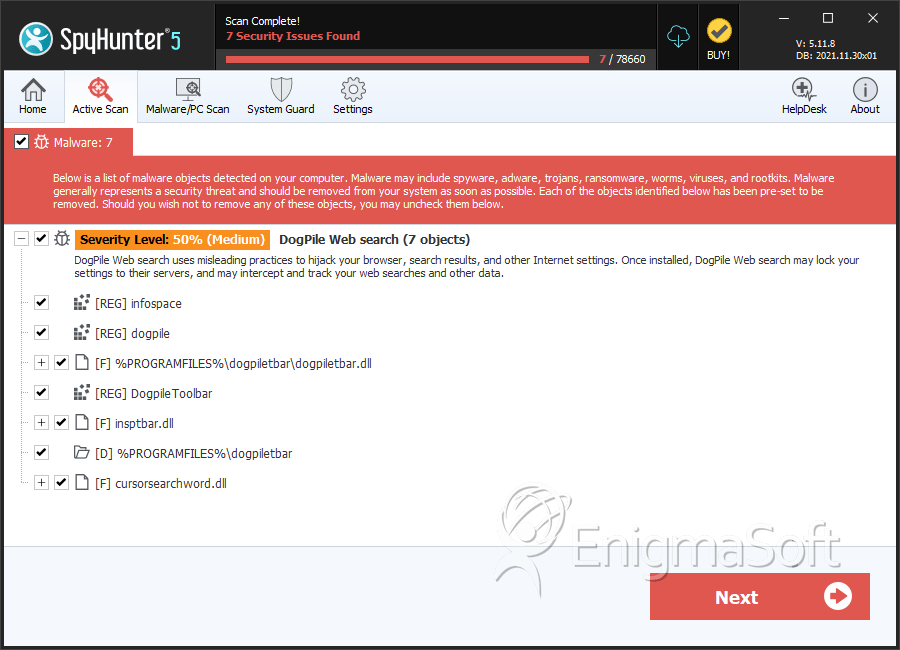
SpyHunter Detects & Remove DogPile Web search
File System Details
| # | File Name | MD5 |
Detections
Detections: The number of confirmed and suspected cases of a particular threat detected on
infected computers as reported by SpyHunter.
|
|---|---|---|---|
| 1. | dogpiletbar.dll | c1b0936e1dbf396b23ab7429cd664c37 | 97 |
| 2. | insptbar.dll | 71c5d8194bb128ff5f2e586423019cfb | 4 |
| 3. | cursorsearchword.dll | 19e456bb66a838e105fae752e328d8e7 | 1 |
Registry Details
Directories
DogPile Web search may create the following directory or directories:
| %PROGRAMFILES%\dogpiletbar |
URLs
DogPile Web search may call the following URLs:
| dogpile.com |