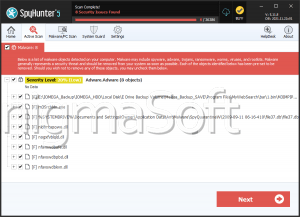
Adware.Amonetize.FBA
Threat Scorecard
EnigmaSoft Threat Scorecard
EnigmaSoft Threat Scorecards are assessment reports for different malware threats which have been collected and analyzed by our research team. EnigmaSoft Threat Scorecards evaluate and rank threats using several metrics including real-world and potential risk factors, trends, frequency, prevalence, and persistence. EnigmaSoft Threat Scorecards are updated regularly based on our research data and metrics and are useful for a wide range of computer users, from end users seeking solutions to remove malware from their systems to security experts analyzing threats.
EnigmaSoft Threat Scorecards display a variety of useful information, including:
Popularity Rank: The ranking of a particular threat in EnigmaSoft’s Threat Database.
Severity Level: The determined severity level of an object, represented numerically, based on our risk modeling process and research, as explained in our Threat Assessment Criteria.
Infected Computers: The number of confirmed and suspected cases of a particular threat detected on infected computers as reported by SpyHunter.
See also Threat Assessment Criteria.
| Popularity Rank: | 21,841 |
| Threat Level: | 20 % (Normal) |
| Infected Computers: | 20 |
| First Seen: | March 26, 2022 |
| Last Seen: | October 3, 2026 |
| OS(es) Affected: | Windows |
Adware.Amonetize.FBA is an adware detection name used to identify a program belonging to the Amonetize family of potentially unwanted applications. Programs flagged under this detection are generally bundled with free software downloads and are designed to generate advertising revenue for their distributors by displaying unwanted ads and promotional content on an infected computer. While not typically classified as highly destructive malware, adware like this can significantly disrupt the user experience and introduce privacy and security risks.
Table of Contents
What Adware.Amonetize.FBA Does
Like other members of the Amonetize family, this adware typically installs itself alongside legitimate free applications without clearly informing the user of everything being added to the system. Once active, it is known to inject advertisements into web browsers, including pop-ups, banners, in-text links, and redirects to sponsored websites. These ads are usually served regardless of which website the user is actually visiting, and clicking on them can lead to further unwanted downloads or low-quality commercial offers.
In addition to displaying ads, adware of this type often modifies browser settings, such as the default search engine, homepage, or new tab page, in order to funnel traffic toward specific websites. Some variants may also collect non-personal data related to browsing habits, such as pages visited, search terms, or general system information, which is then used to serve more "targeted" advertising or shared with third-party advertising networks.
How It Usually Gets Onto Computers
Adware belonging to the Amonetize family typically spreads through bundled software installers. Users downloading free programs, media players, download managers, or cracked software from third-party websites may unknowingly agree to install this adware if they rush through the installation wizard. Choosing "Quick" or "Recommended" install options, rather than "Custom" or "Advanced" settings, often hides the fact that extra components are being added to the system. Deceptive advertising networks and misleading download buttons on file-sharing sites can also lead users to install this type of software.
Risks for the User
While adware is generally considered less dangerous than more severe malware categories like ransomware or trojans, it still carries real risks. Constant pop-ups and redirects can disrupt everyday browsing and make the computer frustrating to use. Because adware frequently connects to third-party ad networks, there is also a risk of being exposed to malicious or scam advertisements, fake software updates, and phishing pages. Additionally, the data collection practices common in this category can raise privacy concerns, as information about browsing patterns may be shared with unknown advertising partners.
Signs of Infection
- Frequent pop-up ads or ads appearing on websites that normally do not display them
- A changed browser homepage, new tab page, or default search engine without permission
- New browser extensions or toolbars that were not intentionally installed
- Noticeably slower browser or system performance
- Unexpected redirects to unfamiliar or suspicious websites
How to Stay Protected
To reduce the risk of adware infections, users should always download software from official or trusted sources, carefully read each step of installation wizards, and choose custom installation options to deselect any bundled extras. Keeping an eye on browser extensions and installed programs, and periodically reviewing them for anything unfamiliar, can help catch unwanted software early. Using reliable security software and keeping both the operating system and browsers updated also reduces the chances of adware and other unwanted programs slipping through.
Analysis Report
General information
| Family Name: | Adware.Amonetize.FBA |
|---|---|
| Signature status: | No Signature |
Known Samples
Known Samples
This section lists other file samples believed to be associated with this family.|
MD5:
ae2b28c7b9b26938d5a85e9ed81803ce
SHA1:
649c9c7acaa865d1764c25cdc23d53c41fe6923b
SHA256:
32B17CAE0668B0531E2FEED3136C89FA7F1D57C7AECA5FB47241C047B1E60902
File Size:
616.96 KB, 616960 bytes
|
Windows Portable Executable Attributes
- File doesn't have "Rich" header
- File doesn't have debug information
- File doesn't have exports table
- File doesn't have relocations information
- File doesn't have security information
- File is 32-bit executable
- File is either console or GUI application
- File is GUI application (IMAGE_SUBSYSTEM_WINDOWS_GUI)
- File is Native application (NOT .NET application)
- File is not packed
Show More
- IMAGE_FILE_DLL is not set inside PE header (Executable)
- IMAGE_FILE_EXECUTABLE_IMAGE is set inside PE header (Executable Image)
File Icons
File Icons
This section displays icon resources found within family samples. Malware often replicates icons commonly associated with legitimate software to mislead users into believing the malware is safe.
Windows PE Version Information
Windows PE Version Information
This section displays values and attributes that have been set in the Windows file version information data structure for samples within this family. To mislead users, malware actors often add fake version information mimicking legitimate software.| Name | Value |
|---|---|
| File Description | win32exe installer |
| File Version | 1.0.2.48 |
| Legal Copyright | Copyright 2013-2014 |
| Product Name | win32exe |
File Traits
- GetConsoleWindow
- HighEntropy
- Installer Version
- x86
Block Information
Block Information
During analysis, EnigmaSoft breaks file samples into logical blocks for classification and comparison with other samples. Blocks can be used to generate malware detection rules and to group file samples into families based on shared source code, functionality and other distinguishing attributes and characteristics. This section lists a summary of this block data, as well as its classification by EnigmaSoft. A visual representation of the block data is also displayed, where available.| Total Blocks: | 663 |
|---|---|
| Potentially Malicious Blocks: | 105 |
| Whitelisted Blocks: | 558 |
| Unknown Blocks: | 0 |
Visual Map
? - Unknown Block
x - Potentially Malicious Block