Windows Safety Checkpoint
Threat Scorecard
EnigmaSoft Threat Scorecard
EnigmaSoft Threat Scorecards are assessment reports for different malware threats which have been collected and analyzed by our research team. EnigmaSoft Threat Scorecards evaluate and rank threats using several metrics including real-world and potential risk factors, trends, frequency, prevalence, and persistence. EnigmaSoft Threat Scorecards are updated regularly based on our research data and metrics and are useful for a wide range of computer users, from end users seeking solutions to remove malware from their systems to security experts analyzing threats.
EnigmaSoft Threat Scorecards display a variety of useful information, including:
Ranking: The ranking of a particular threat in EnigmaSoft’s Threat Database.
Severity Level: The determined severity level of an object, represented numerically, based on our risk modeling process and research, as explained in our Threat Assessment Criteria.
Infected Computers: The number of confirmed and suspected cases of a particular threat detected on infected computers as reported by SpyHunter.
See also Threat Assessment Criteria.
| Threat Level: | 100 % (High) |
| Infected Computers: | 3 |
| First Seen: | April 27, 2012 |
| Last Seen: | February 6, 2019 |
| OS(es) Affected: | Windows |
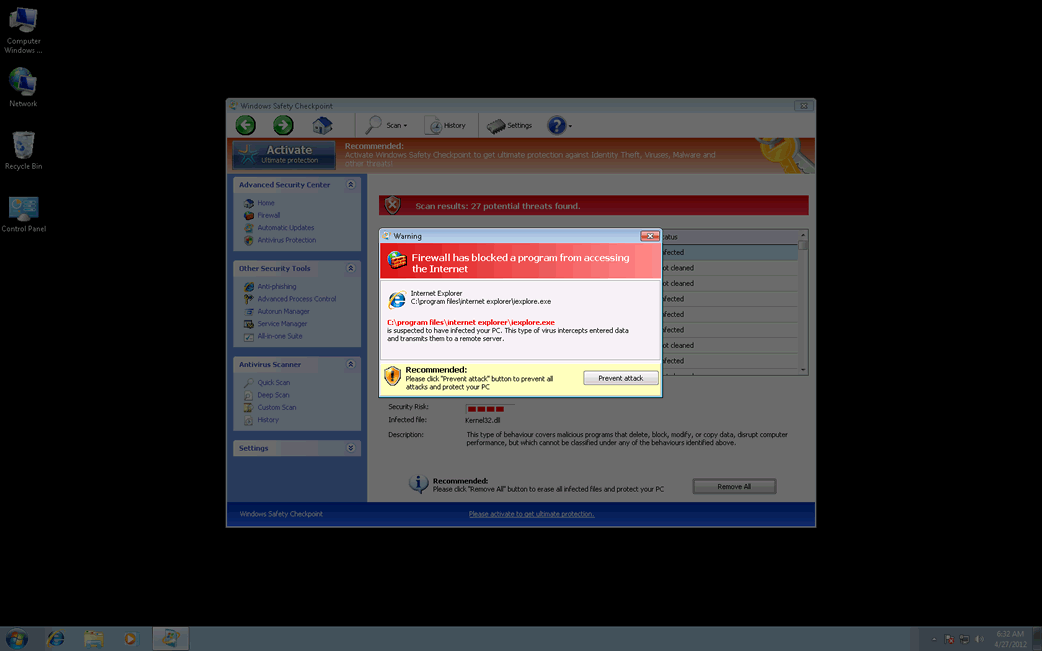
Windows Safety Checkpoint Image
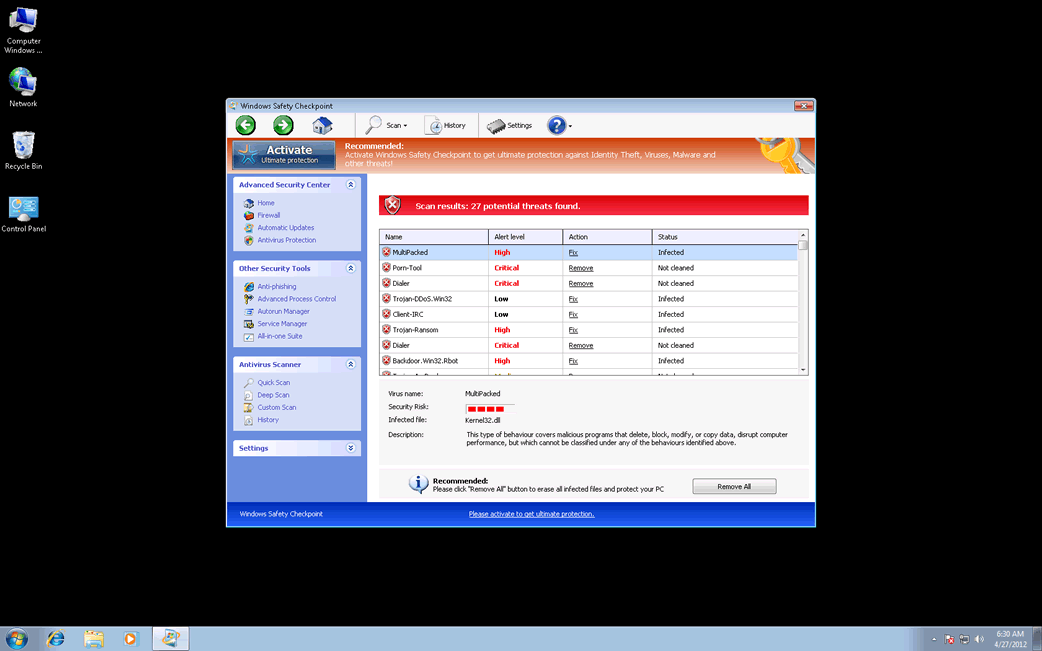
Windows Safety Checkpoint is an application that closely mimics real security programs, such as Microsoft Security Essentials or Windows Defender. However, Windows Safety Checkpoint has no real anti-virus capabilities. According to ESG PC security researchers, Windows Safety Checkpoint is a type of malware commonly known as a rogue anti-virus program. Rogue antivirus programs are often installed by Trojans and closely associated with other malware. They are designed to make a PC user think that their computer has been invaded by numerous viruses and then attempts to sell the victim a fake anti-virus program, such as Windows Safety Checkpoint.
Windows Safety Checkpoint belongs to a large family of rogue anti-virus software that has been around since 2009. Known as the FakeVimes family of malware, these bogus security applications are still active in 2012. In fact, the most recent versions of FakeVimes malware are much more malicious than previous iterations due to their association with the ZeroAccess rootkit. Windows Safety Checkpoint is one of the many FakeVimes programs released in 2012; others include Virus Melt, Presto TuneUp, Fast Antivirus 2009, Extra Antivirus, Windows Security Suite, Smart Virus Eliminator, Packed.Generic.245, Volcano Security Suite, Windows Enterprise Suite, Enterprise Suite, Additional Guard, PC Live Guard, Live PC Care, Live Enterprise Suite, Security Antivirus, My Security Wall, CleanUp Antivirus, Smart Security, Windows Protection Suite, Windows Work Catalyst.
Table of Contents
How Criminals Use Windows Safety Checkpoint to Scam Their Victims
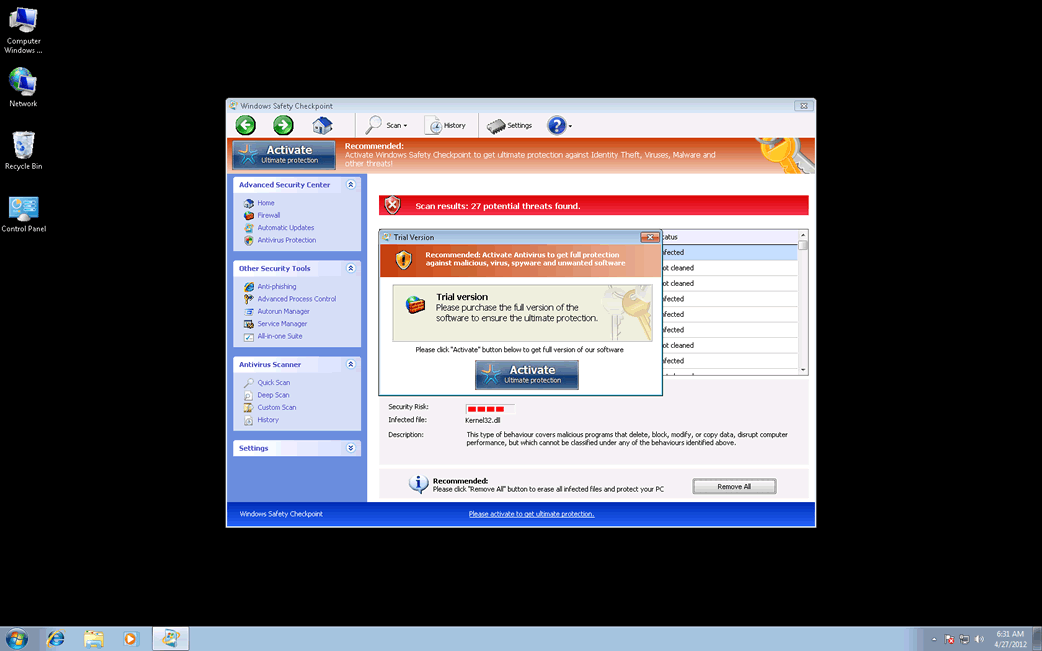
The main goal of Windows Safety Checkpoint is to sell bogus registration keys in order to obtain a useless 'full version' of Windows Safety Checkpoint. To convince their victims that they need to 'upgrade', Windows Safety Checkpoint displays many fake security alerts and error messages that supposedly indicate the presence of a severe Trojan and virus infestation in the victim's computer. Then, Windows Safety Checkpoint, pretending to be a real security program, claims that this supposed infection can be fixed by upgrading this fake security application. Other ways in which Windows Safety Checkpoint misleads its victims is by causing browser redirects, affecting system performance, and preventing the victim from accessing files on the infected computer system.
ESG team of malware researchers strongly advises against paying for Windows Safety Checkpoint and removing this fake security program from your computer system immediately. However, removing this program is not as easy as removing a normal application. Usually, it will be necessary to use a reliable security program. You can stop Windows Safety Checkpoint's most annoying symptoms by entering the registration code 0W000-000B0-00T00-E0020. While this will not remove Windows Safety Checkpoint, it will grant computer users greater freedom in accessing their security software in order to remove Windows Safety Checkpoint safely and permanently.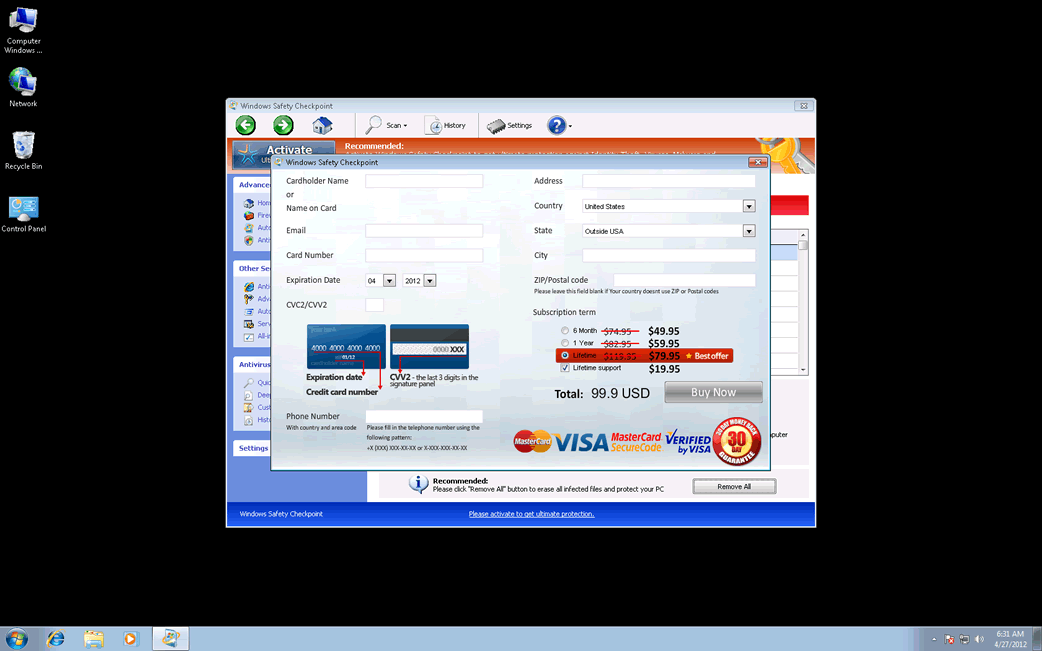
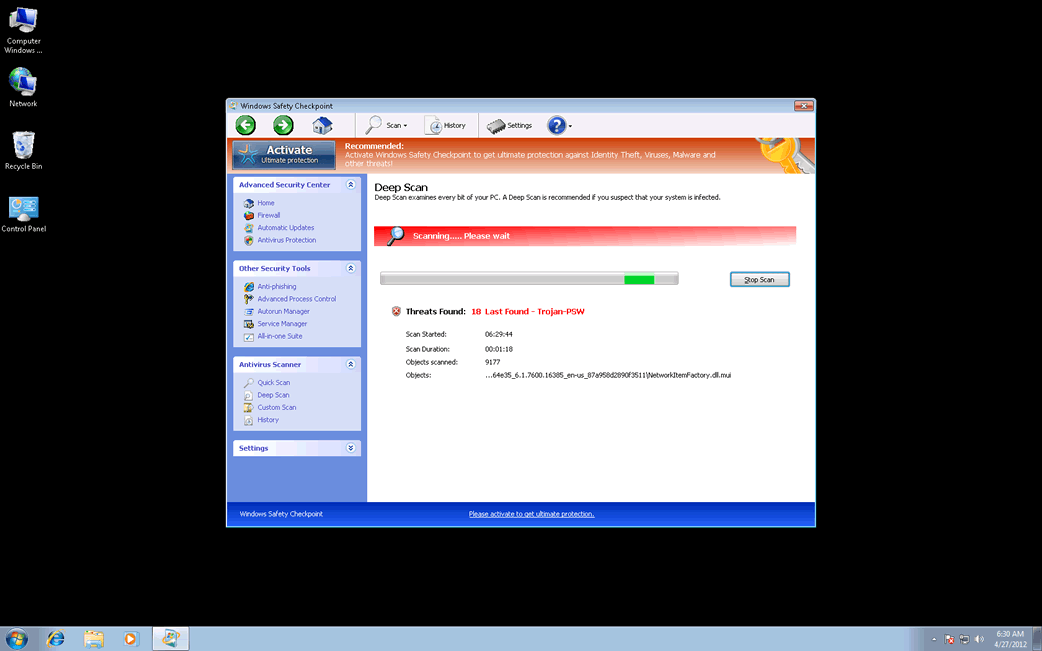
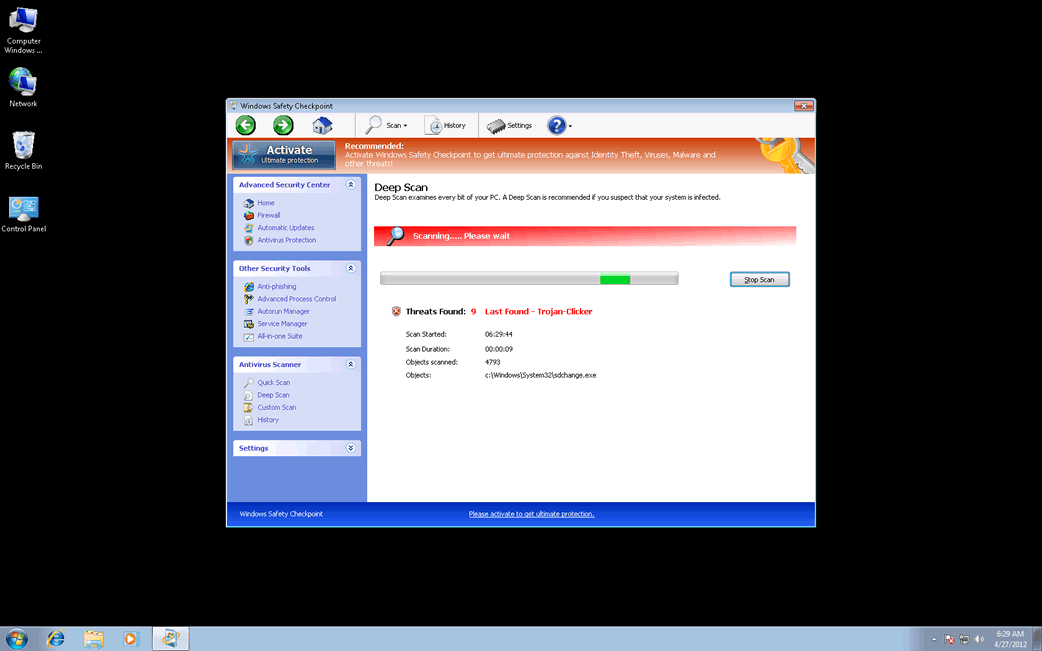
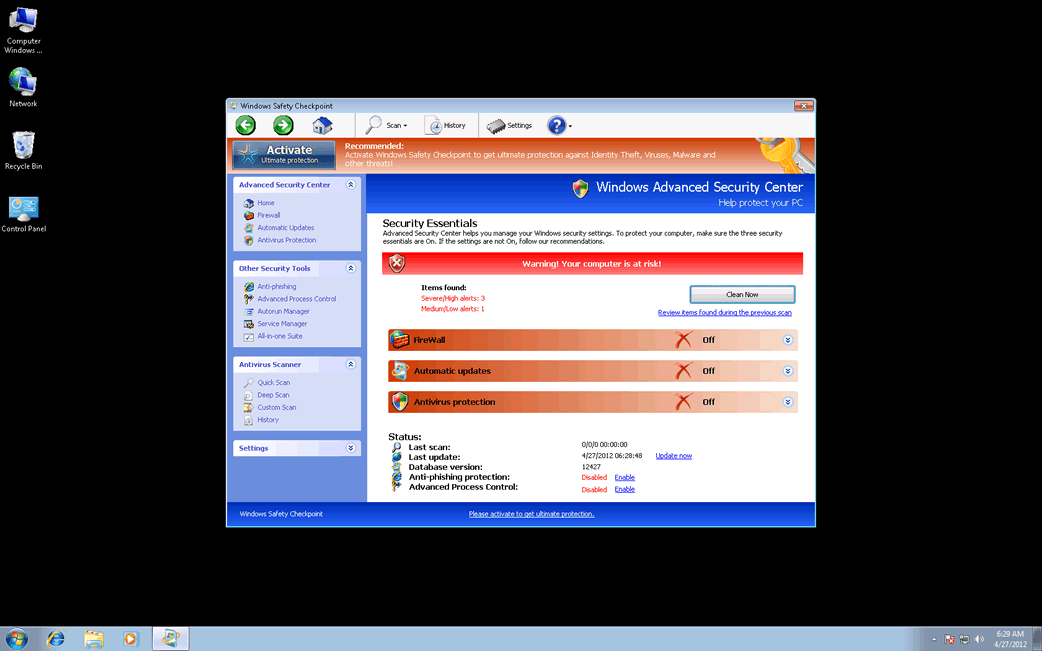
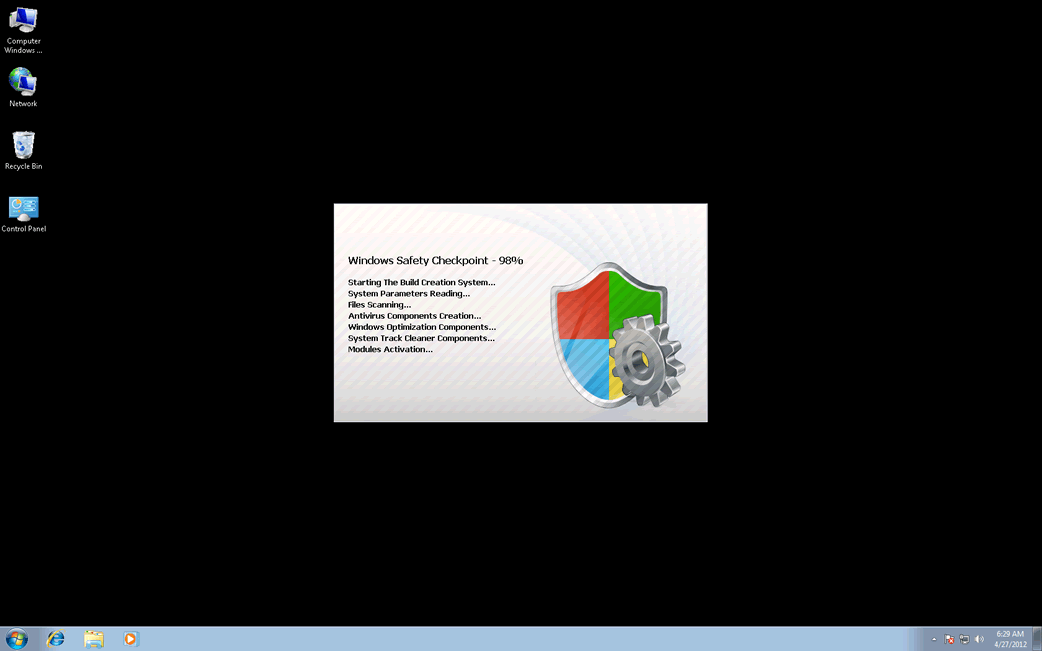
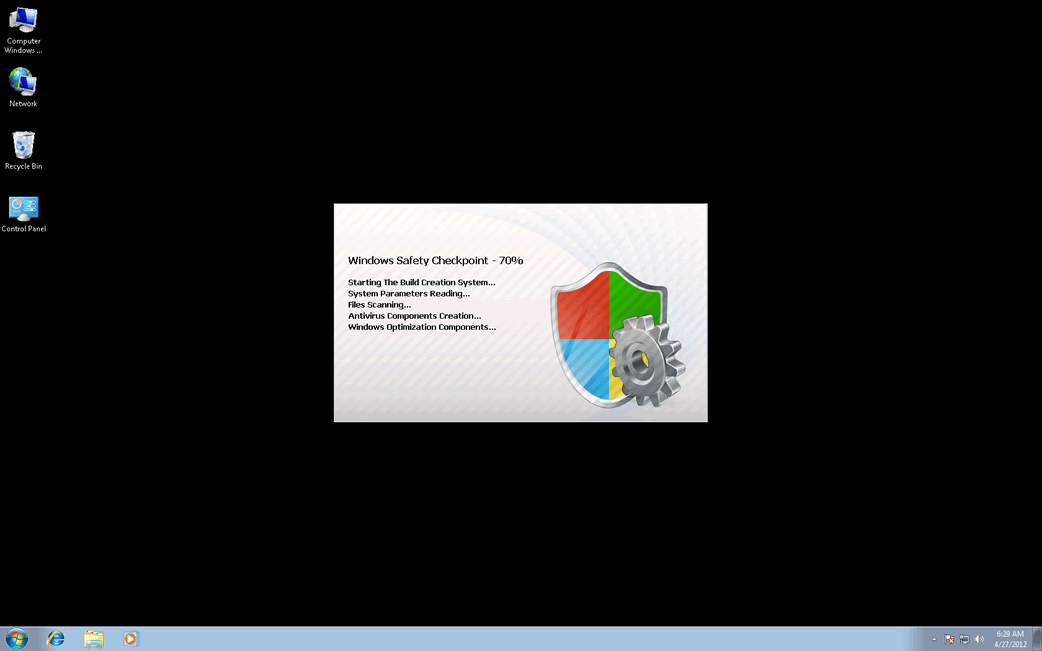
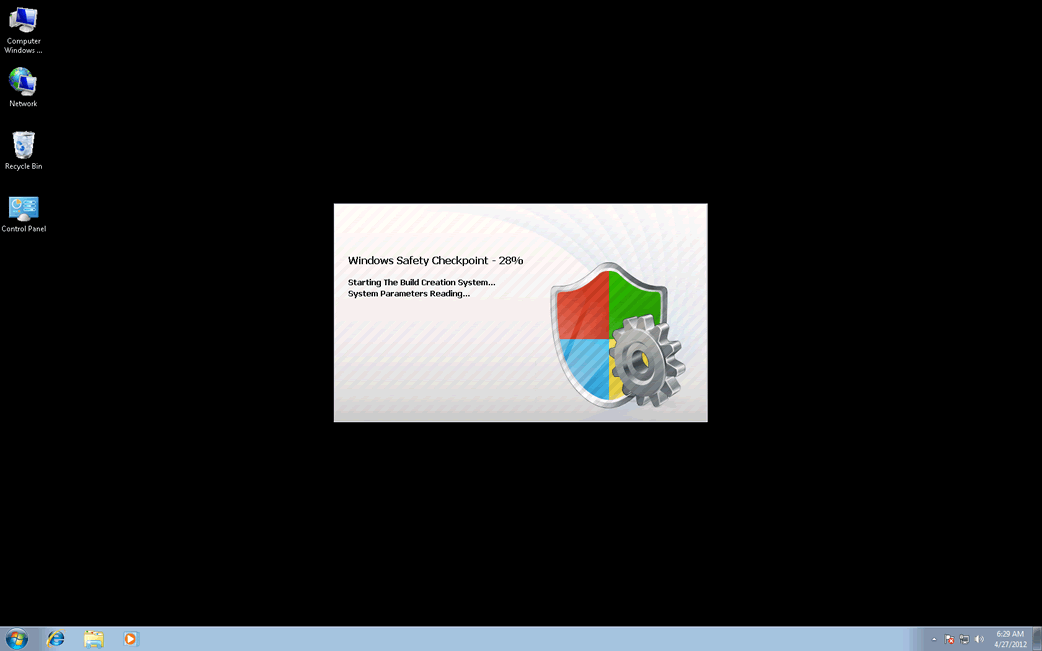
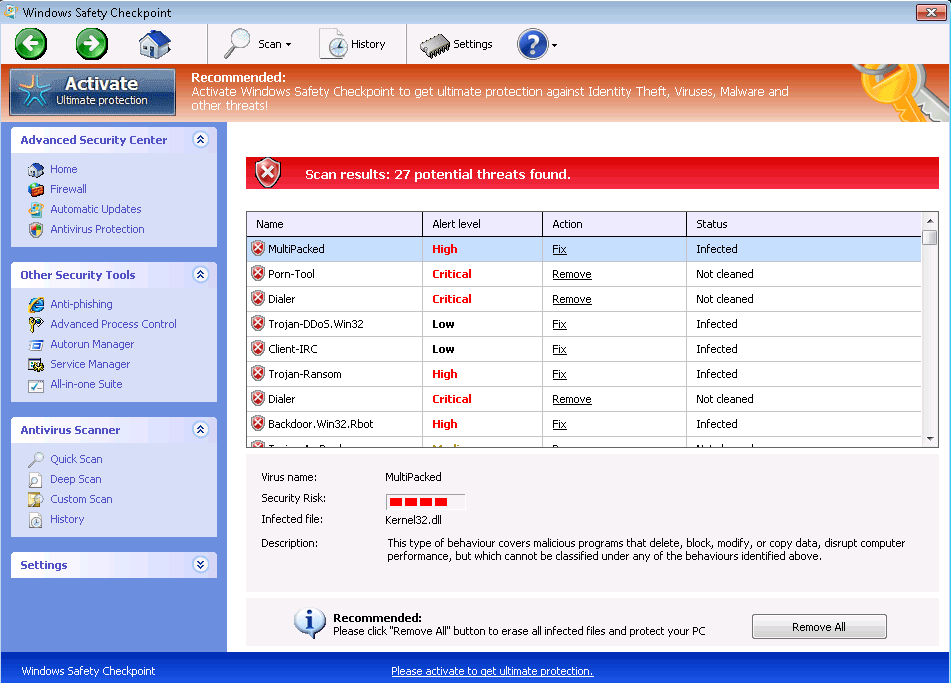
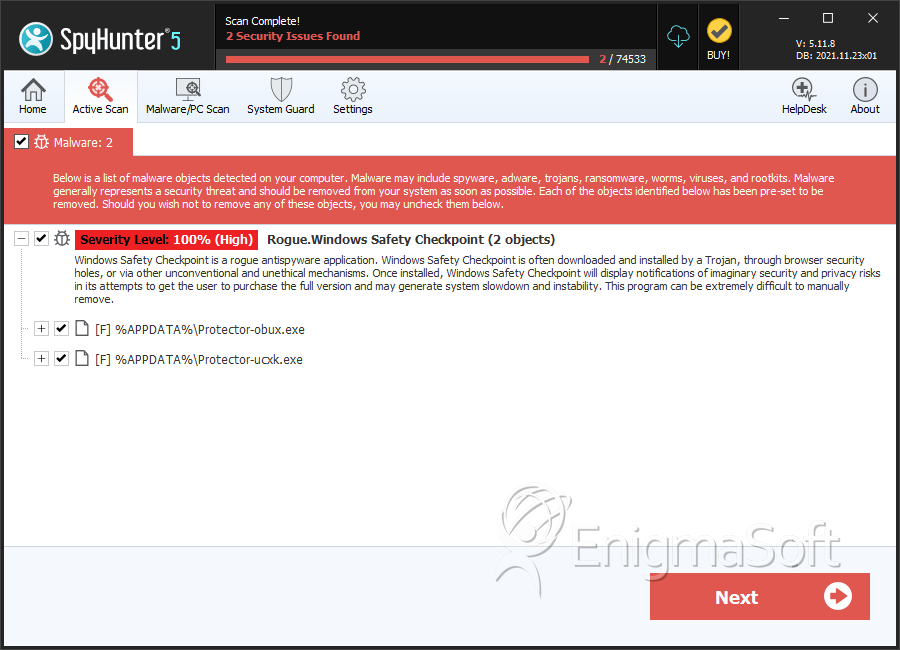
SpyHunter Detects & Remove Windows Safety Checkpoint
Windows Safety Checkpoint Video
Tip: Turn your sound ON and watch the video in Full Screen mode.
File System Details
| # | File Name | MD5 |
Detections
Detections: The number of confirmed and suspected cases of a particular threat detected on
infected computers as reported by SpyHunter.
|
|---|---|---|---|
| 1. | Protector-obux.exe | 6d3b5309cfb72ace5320a827d09a91df | 1 |
| 2. | Protector-ucxk.exe | e2b9f9e66abbb94a9477ca14a3ad39d8 | 1 |
| 3. | %AppData%\Protector-[RANDOM CHARACTERS].exe | ||
| 4. | %AppData%\Inspector-[RANDOM CHARACTERS].exe |